Three Trees
A kitchen in Doi Saket
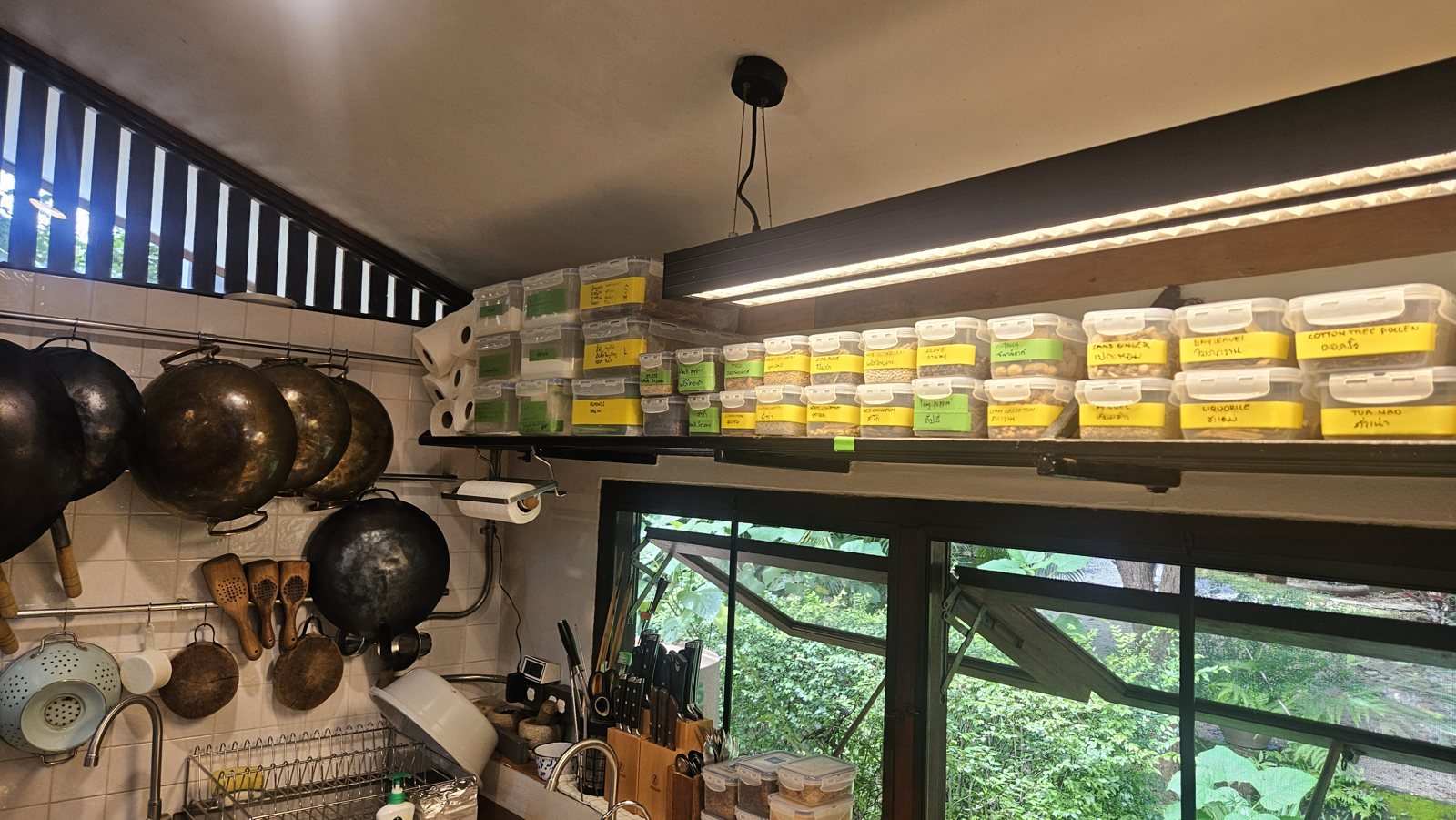
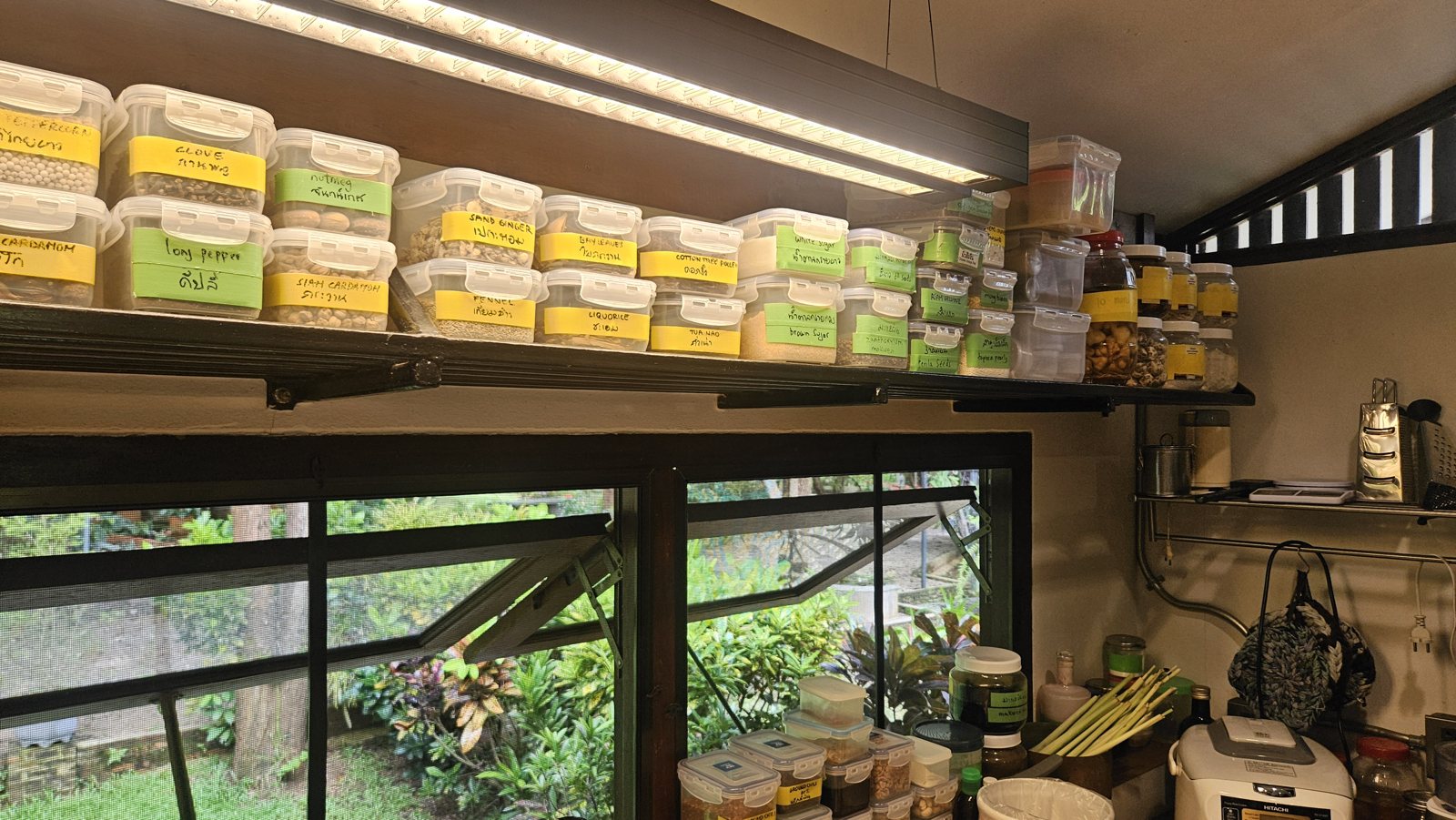
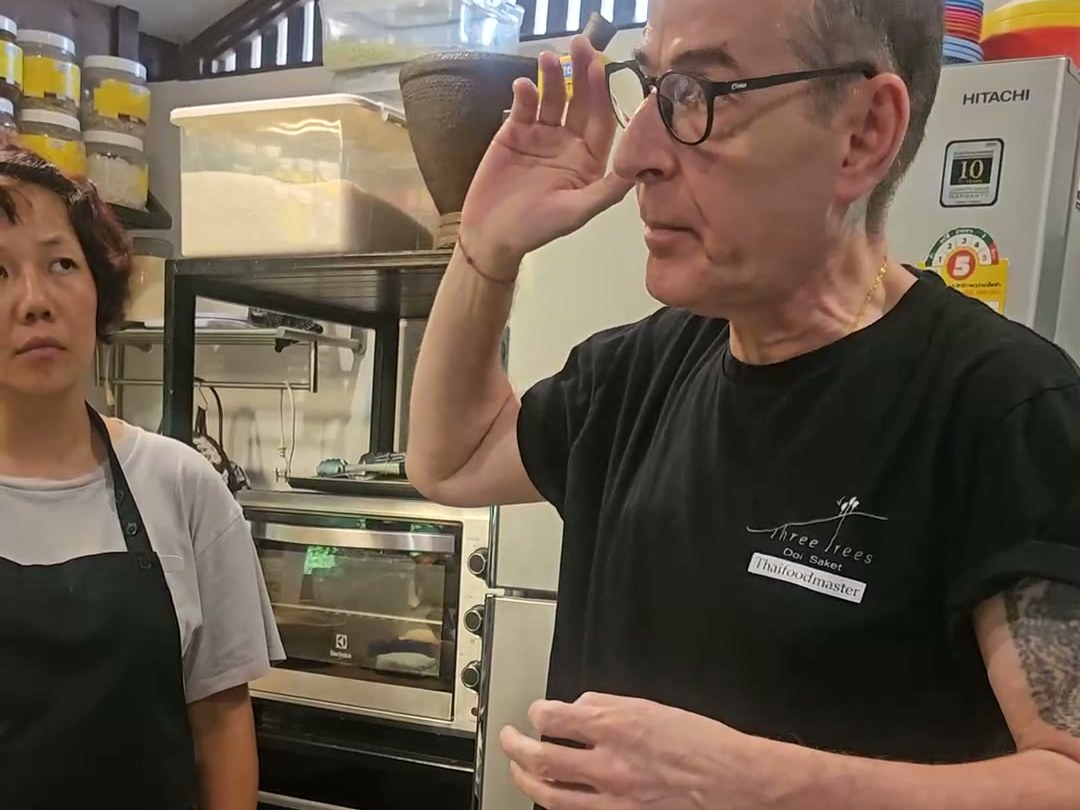
Three Trees is Hanuman Aspler's farm and culinary sanctuary forty minutes from Chiang Mai: a kitchen open to the garden, shelves of hand-labelled pastes and powders, woks and mortars within reach.
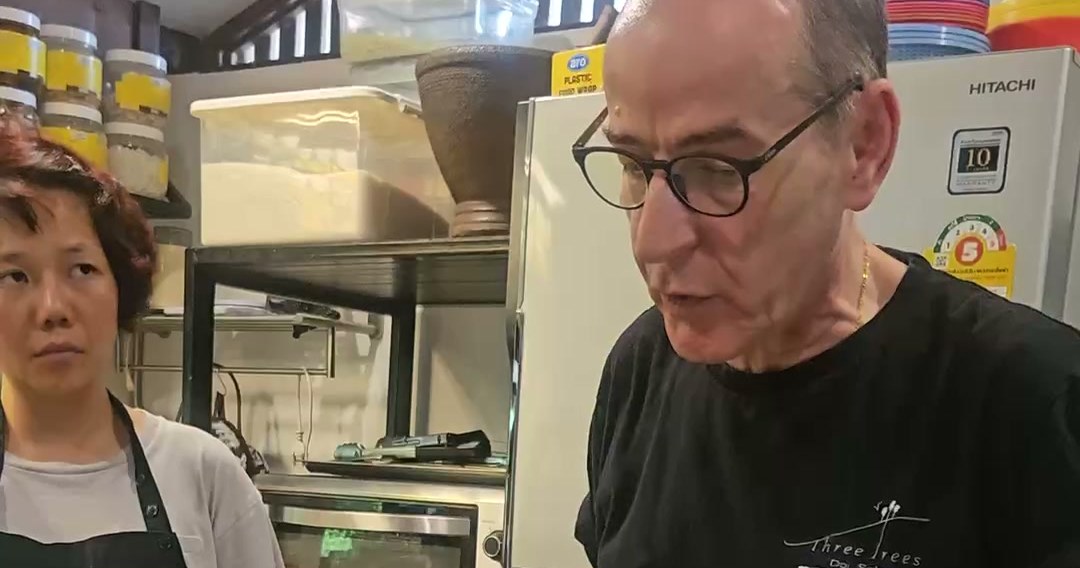
Thai · Doi Saket, near Chiang Mai
with Hanuman Aspler
Hanuman Aspler has lived in Thailand since 1989 and spent more than thirty years researching Siamese cooking from before the Second World War, decoding old culinary manuscripts. He teaches at Three Trees, his farm and culinary sanctuary forty minutes from Chiang Mai, where the cooking is done freehand, by taste and not by measure, and where Chef Elliot learned the pastes, curries and salads on the Roots Alchemy menu.
About Hanuman Aspler →Three Trees
Three Trees is Hanuman Aspler's farm and culinary sanctuary forty minutes from Chiang Mai: a kitchen open to the garden, shelves of hand-labelled pastes and powders, woks and mortars within reach.
The teacher
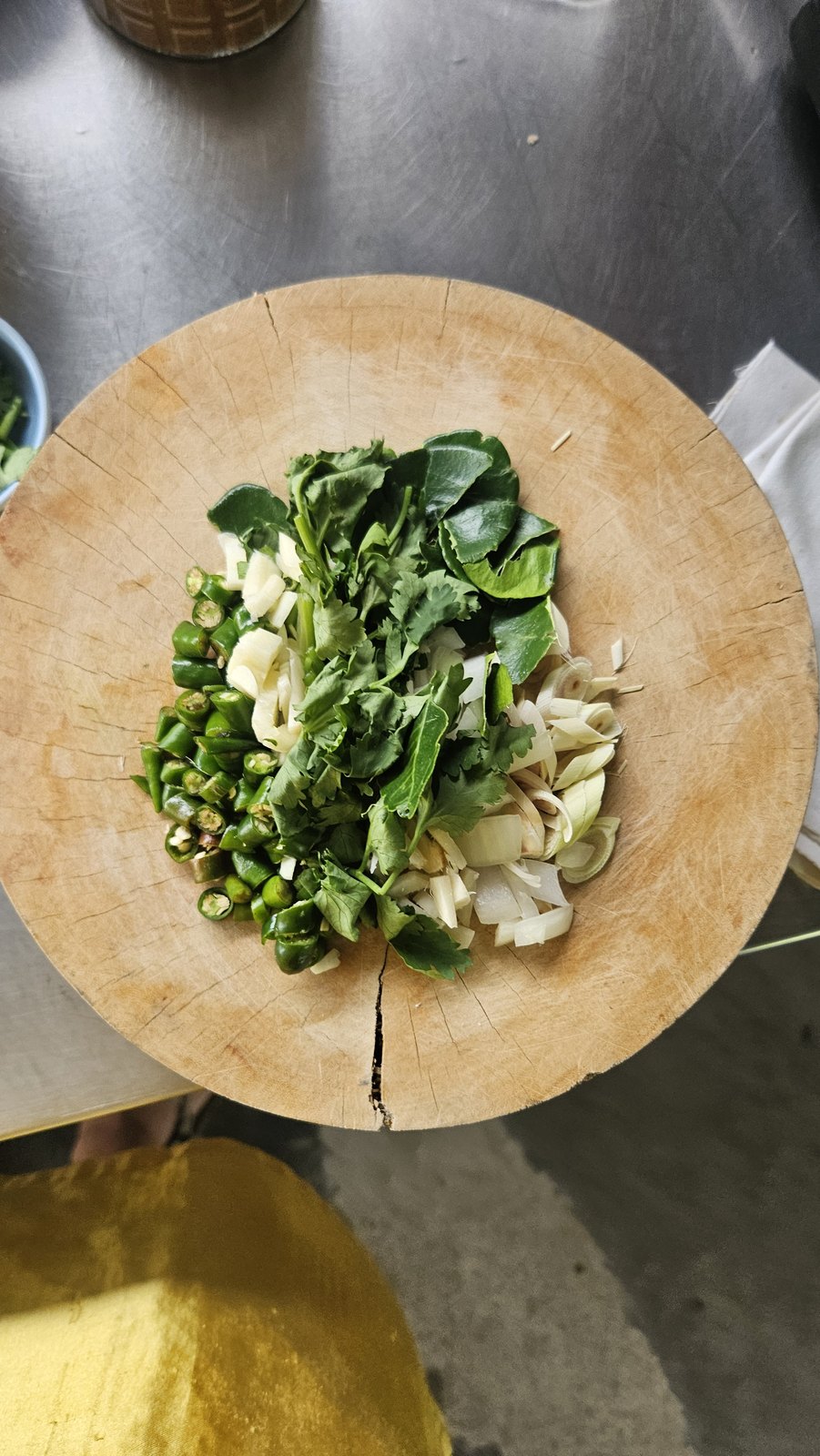
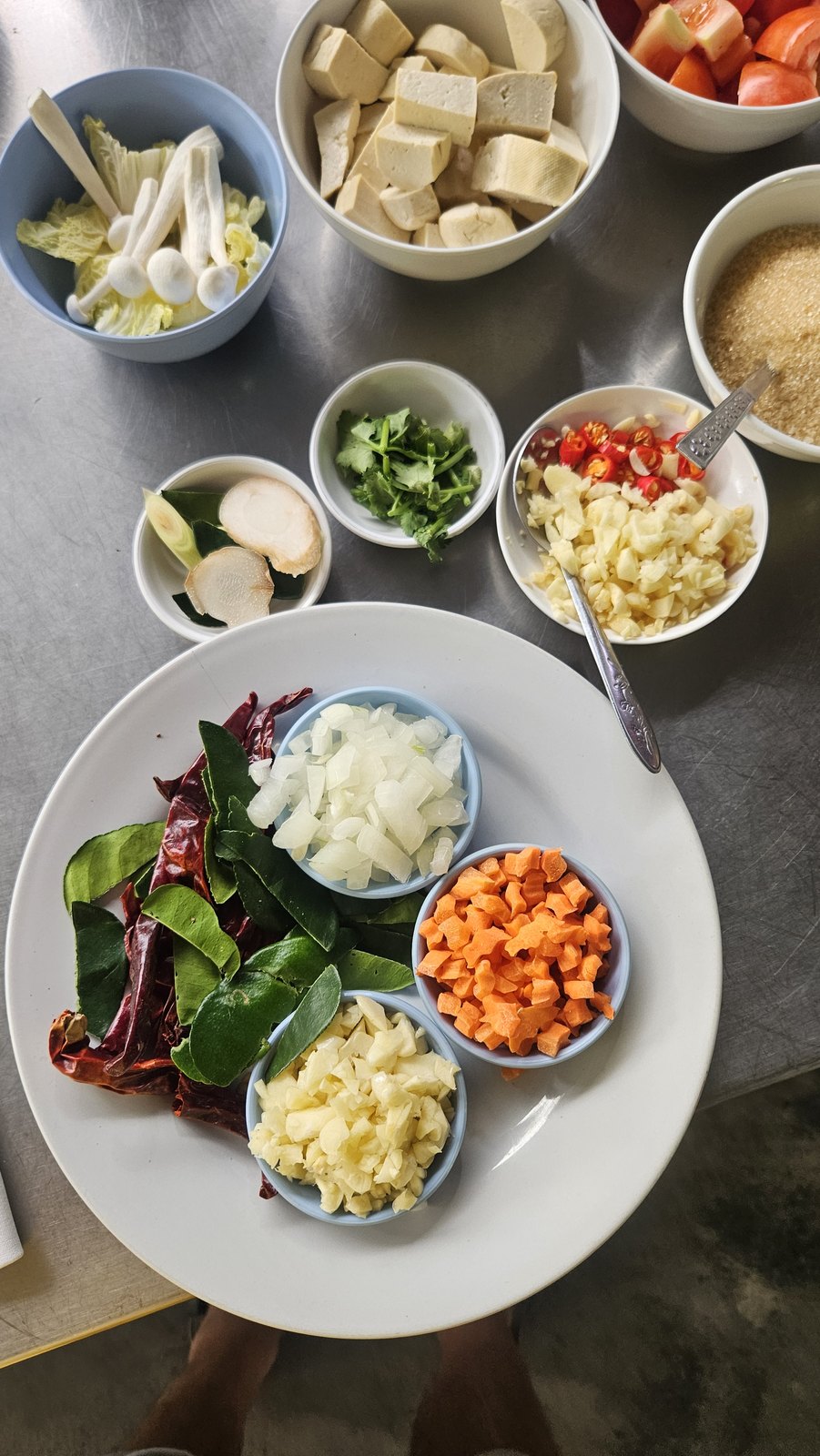
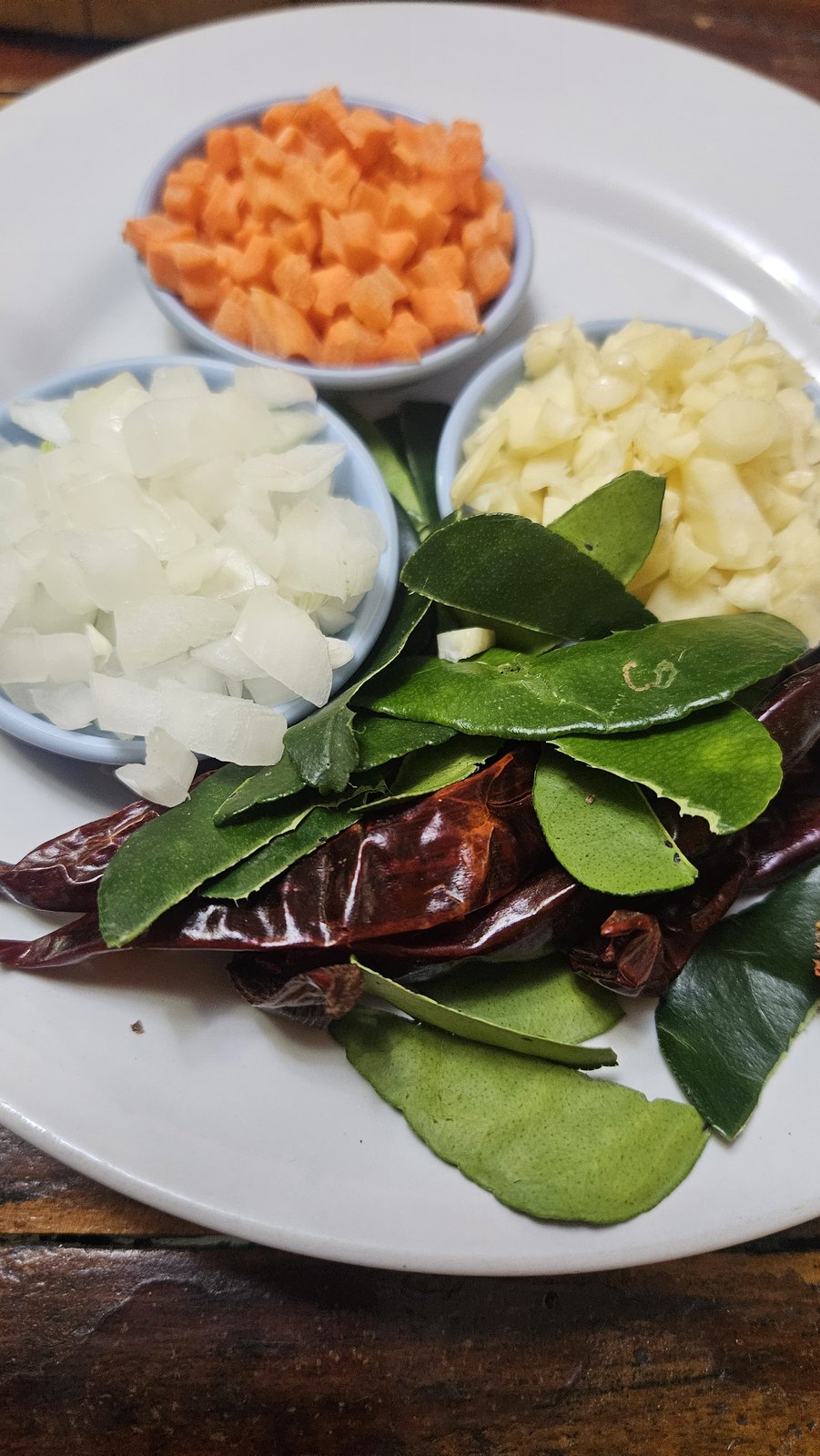
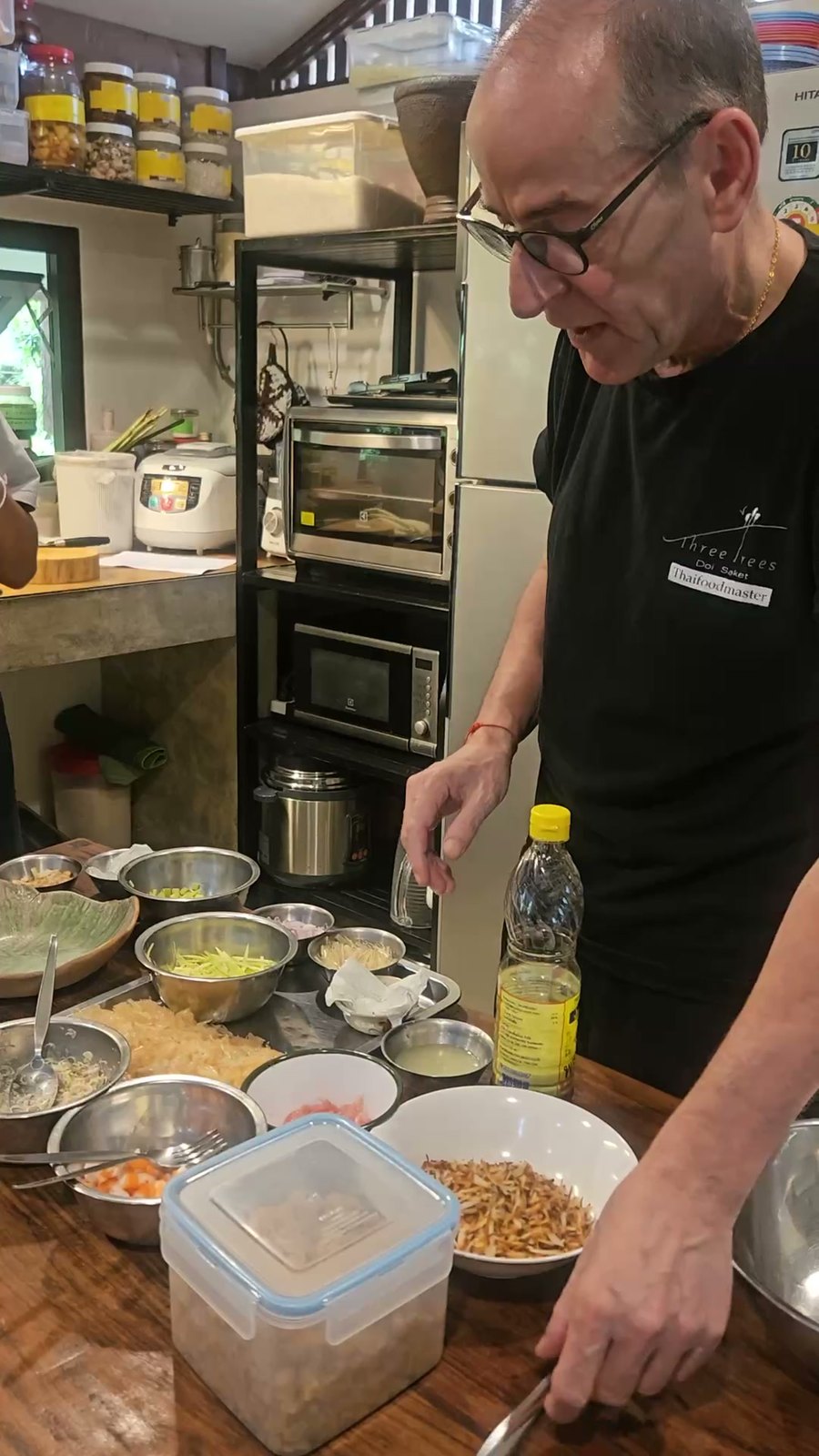
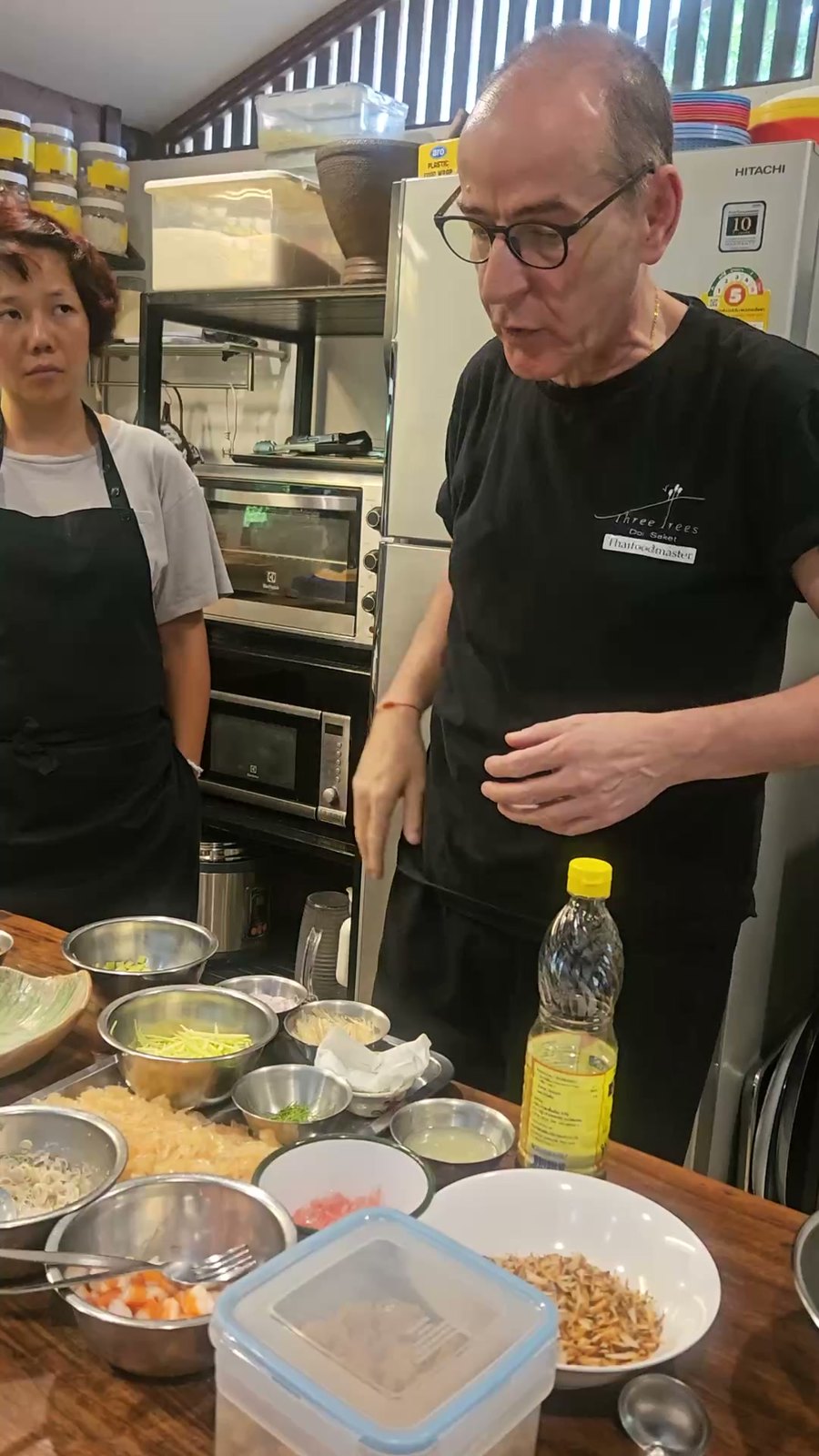
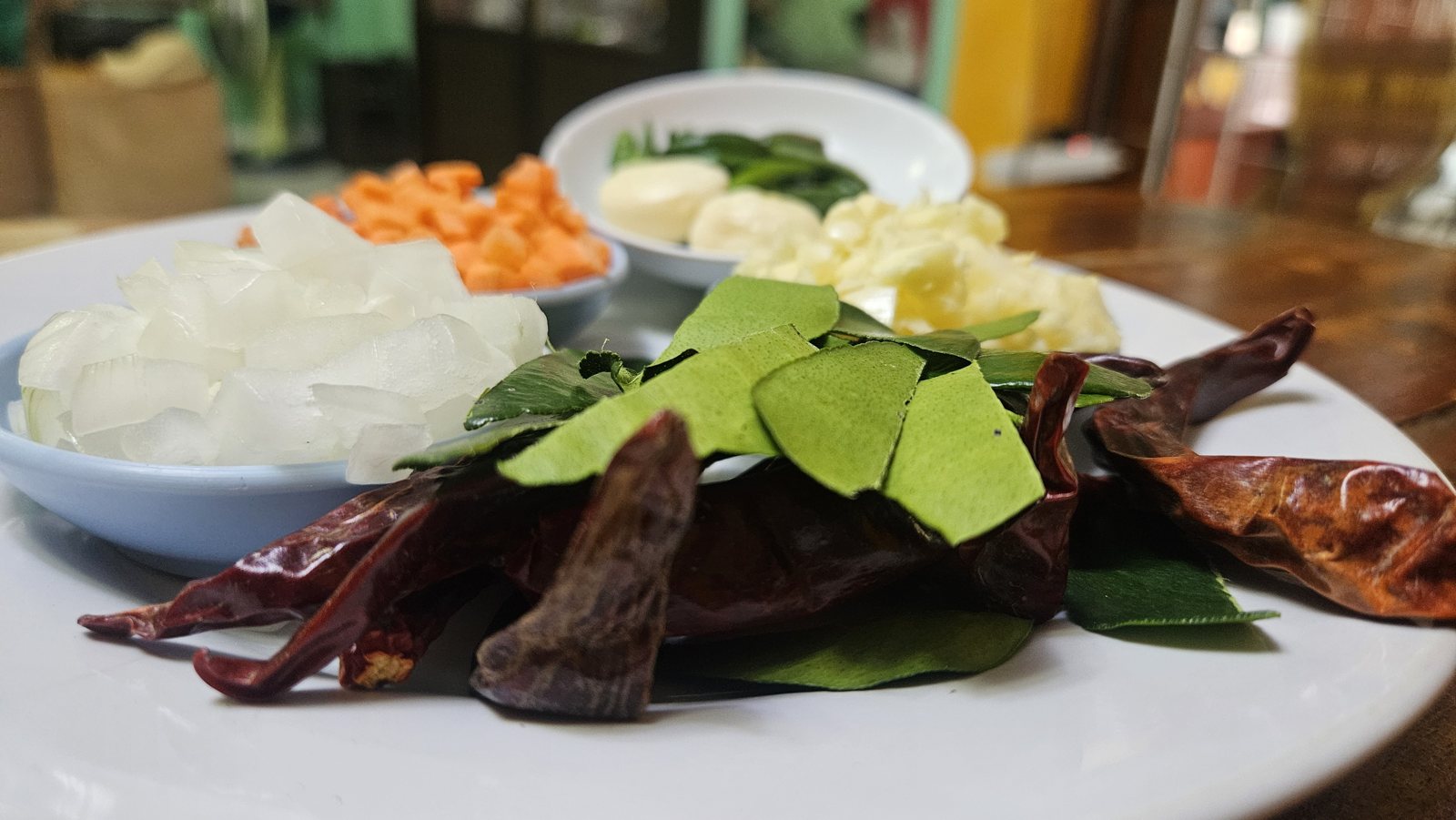
Thirty years into the old Siamese manuscripts, Hanuman teaches at the prep table: the ingredients laid out in bowls, the reasoning behind each one, then the students at the mortar. He calls Thai food a language with its own grammar, and the class is where you learn to speak it freehand.
The market and the garden
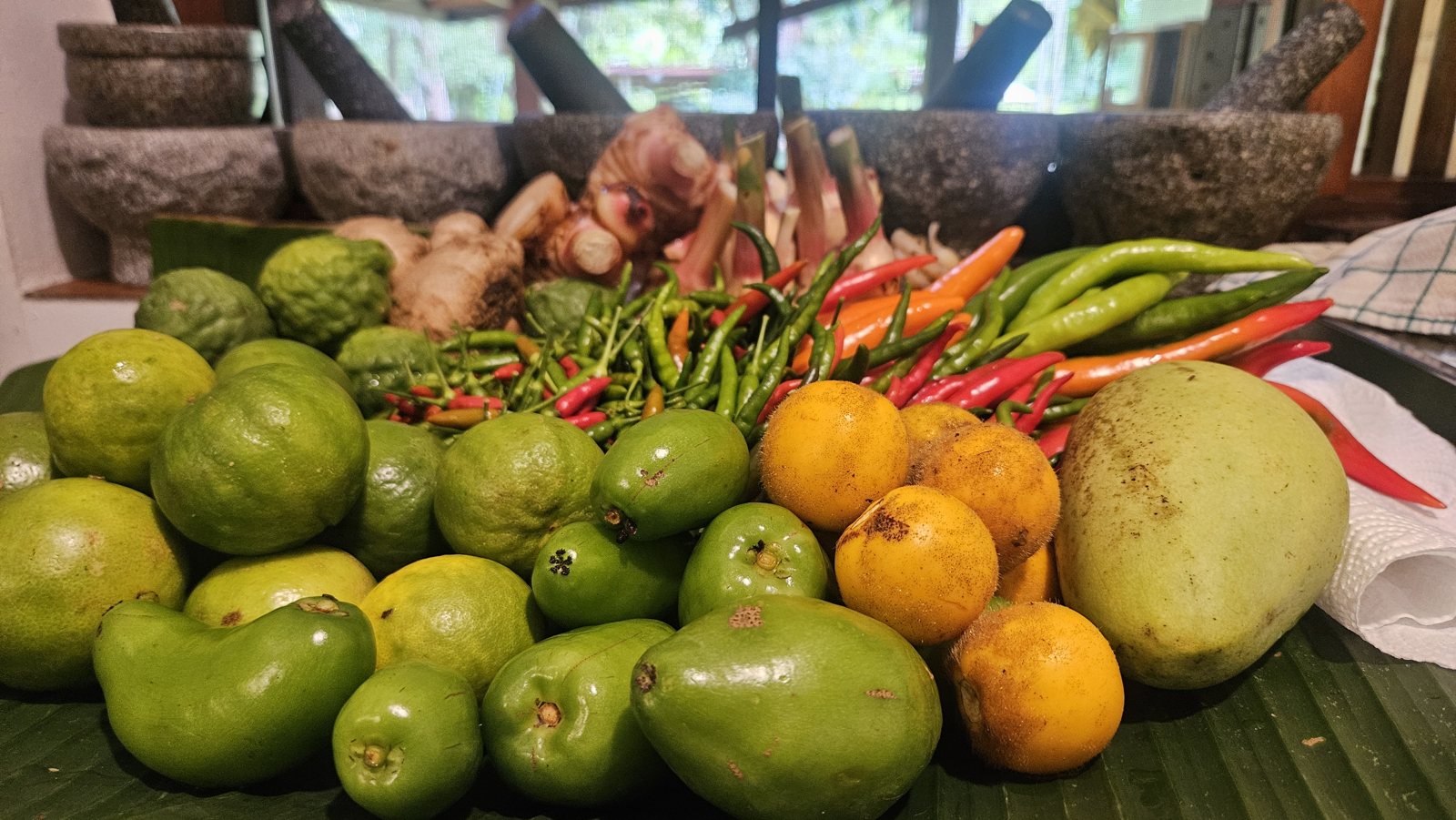
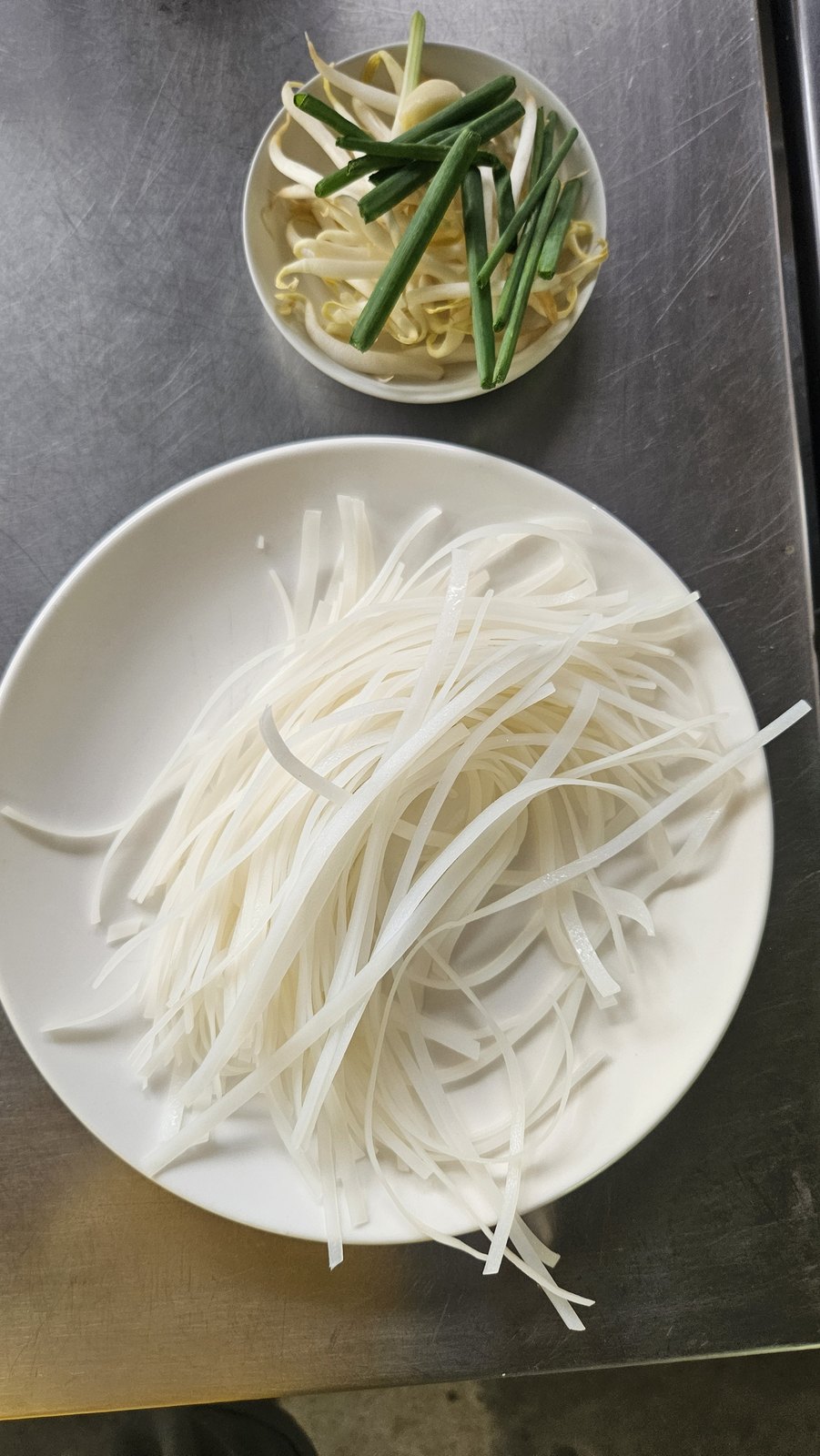
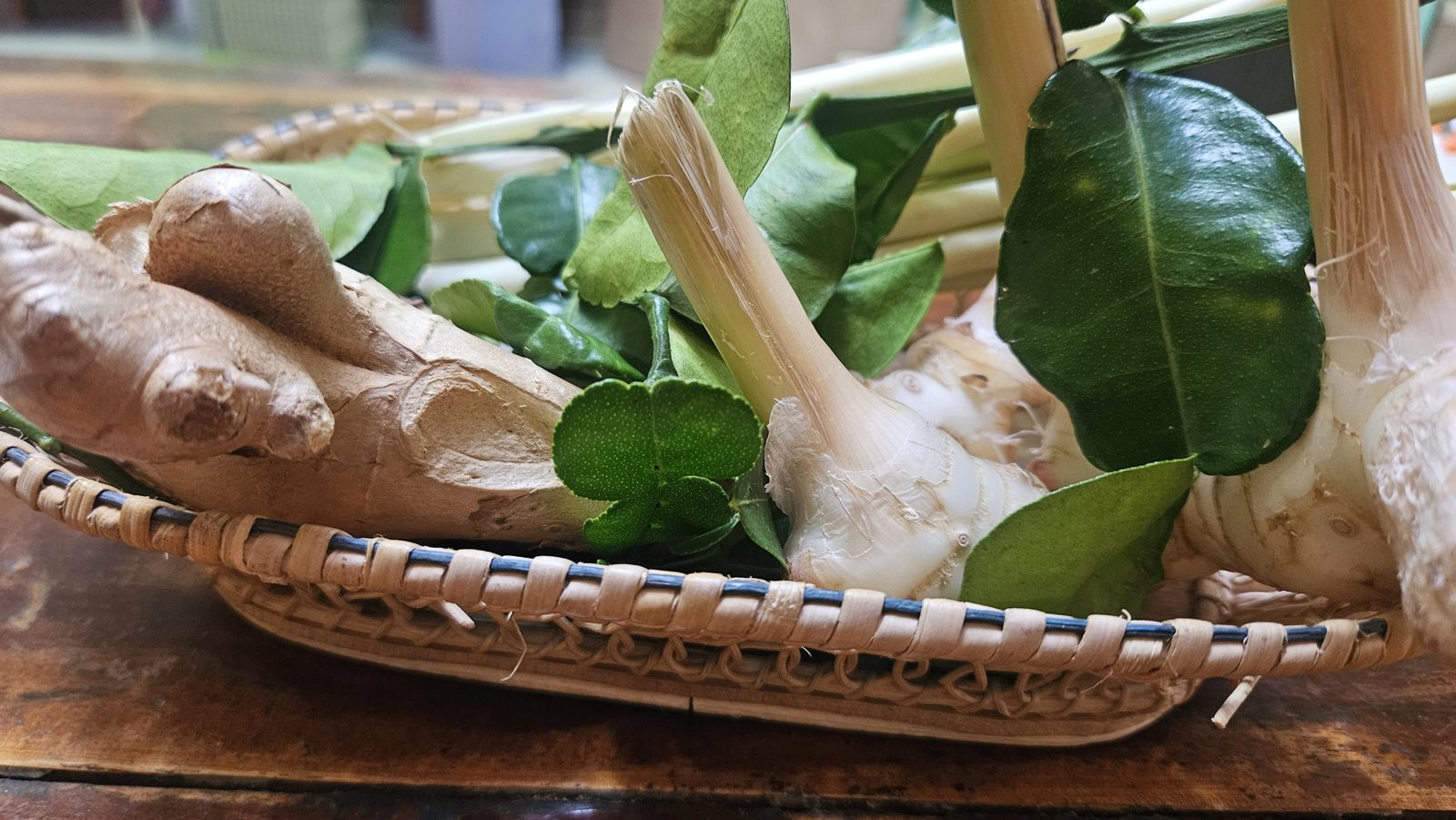
Hanuman has lived in Thailand since 1989 and spent three decades decoding pre-war Siamese manuscripts. Ingredients are bought at the morning market or foraged from the garden, as families did a century ago.
The mortar
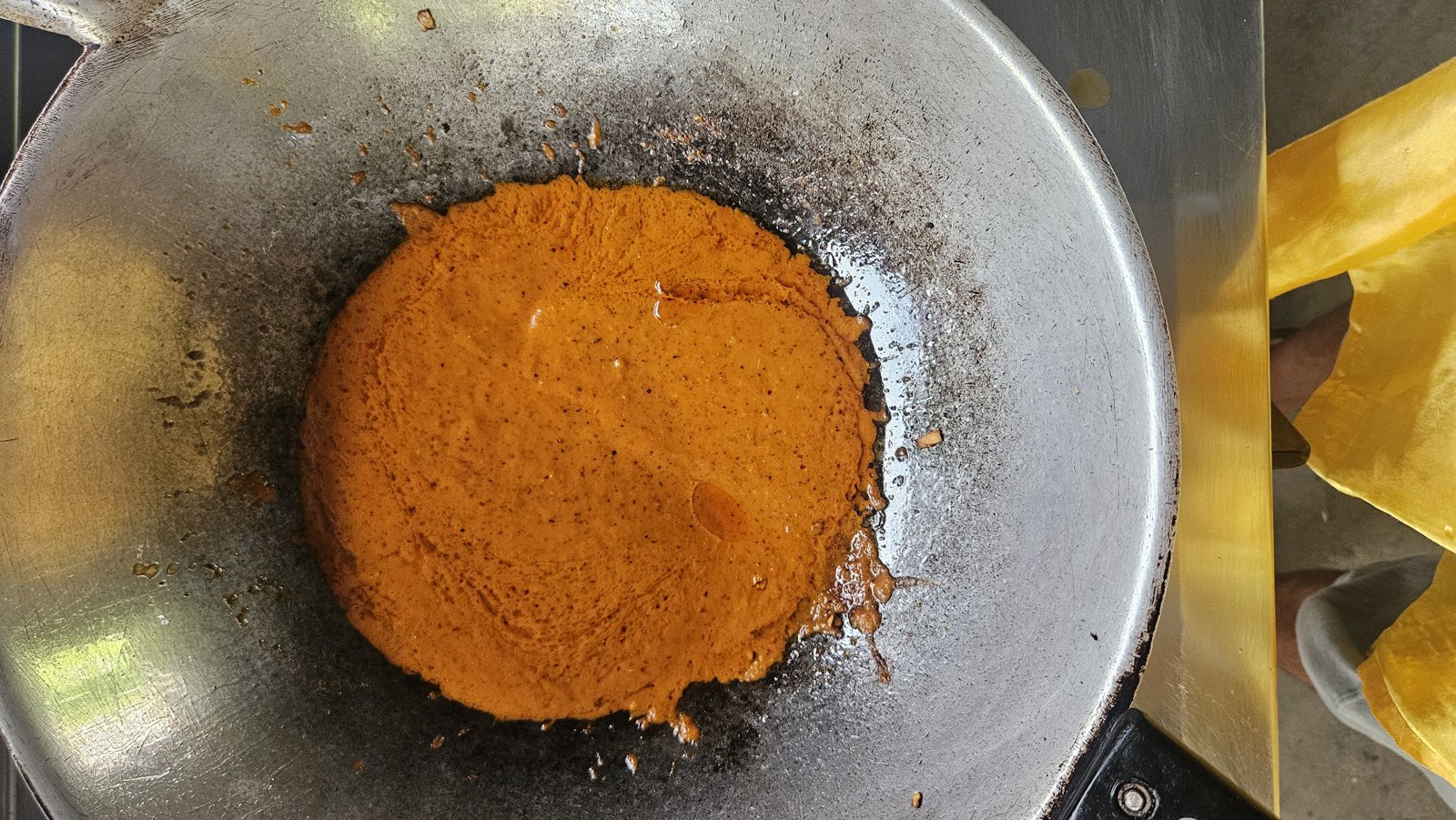
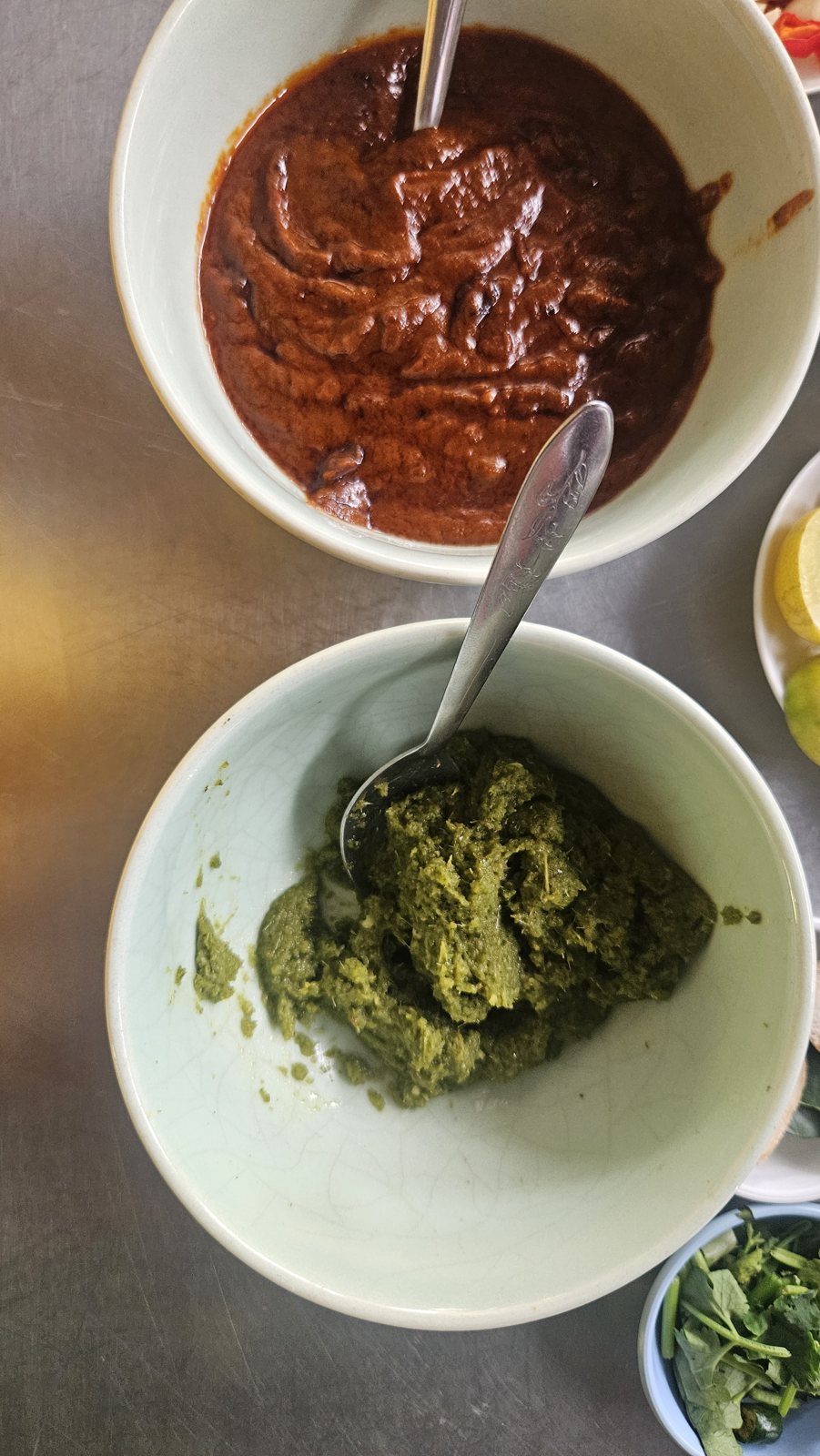
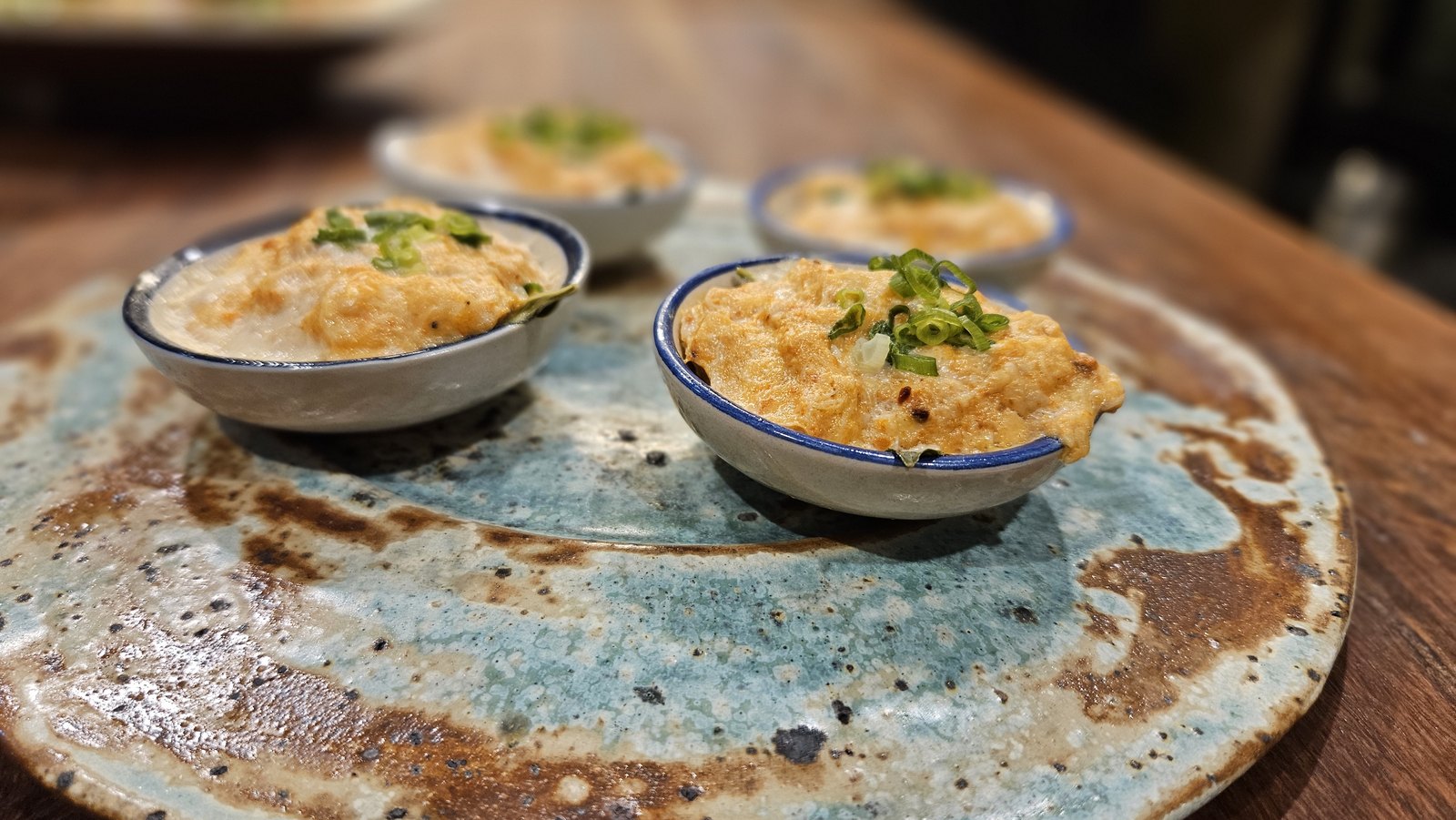
Every curry starts in the stone mortar: dried chilies, galangal, lemongrass, shrimp paste or its plant-based stand-in, pounded until the paste is smooth. Then the steamer, for hor mok in banana leaf cups.
Curries
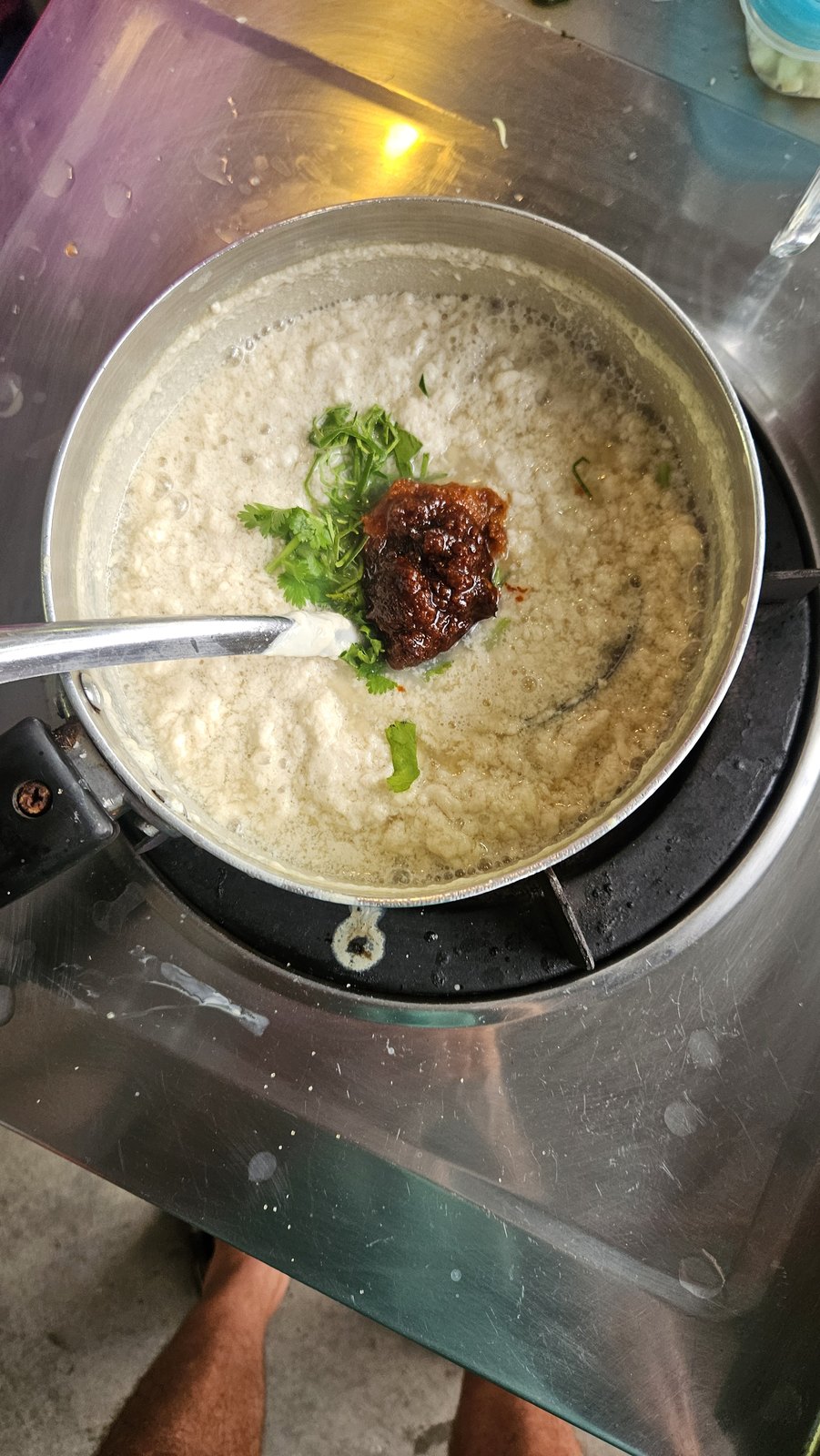
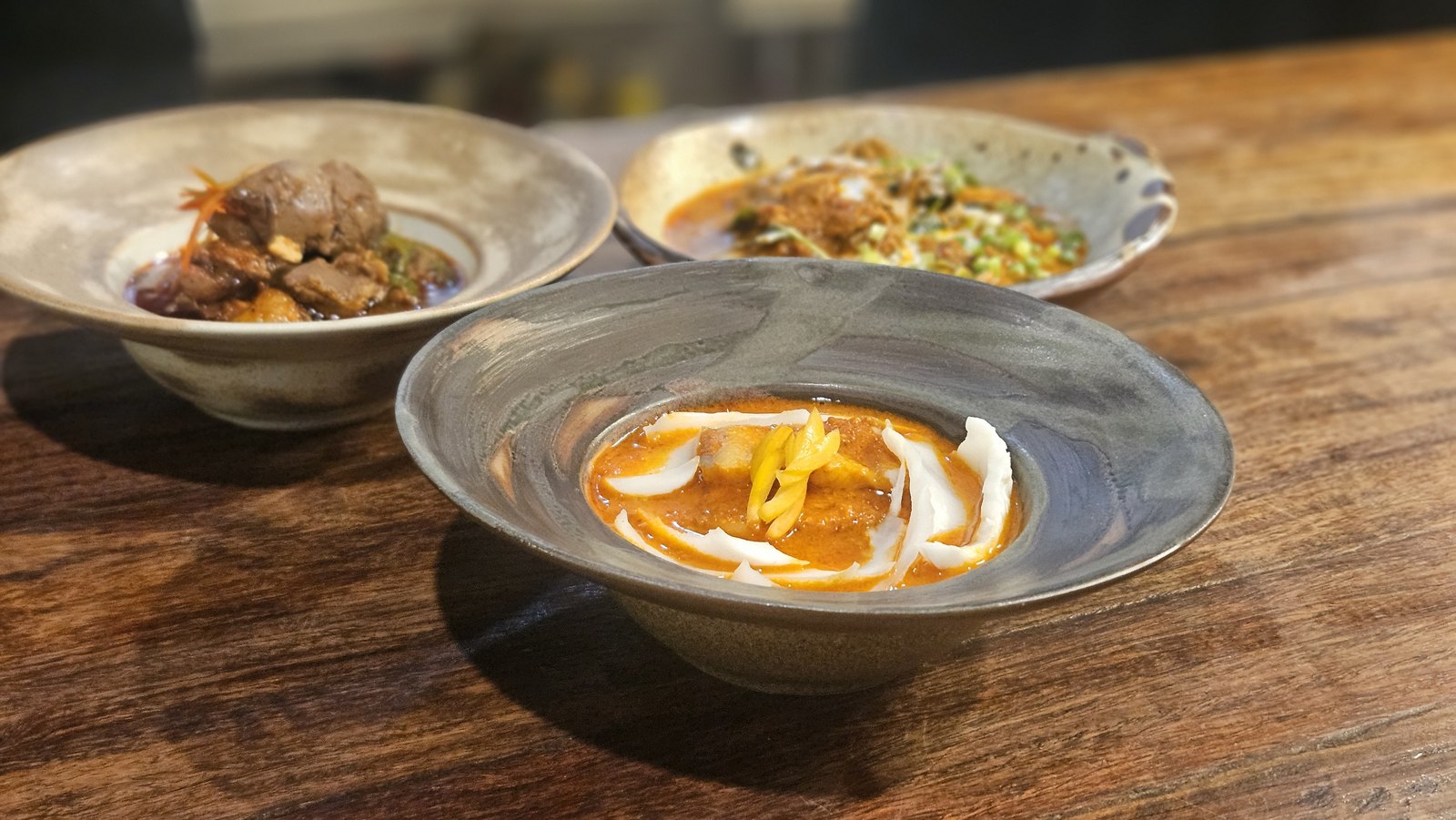
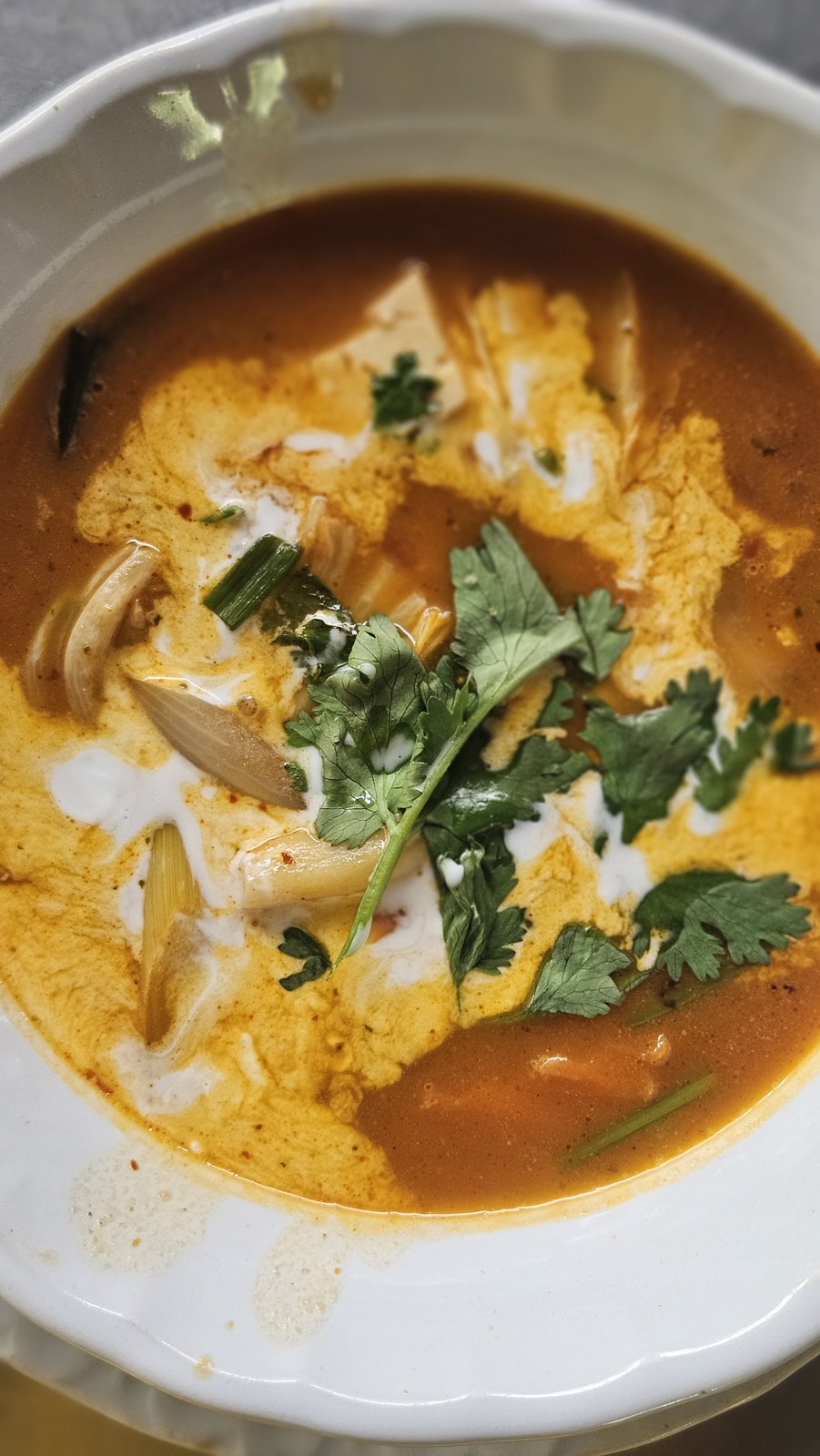
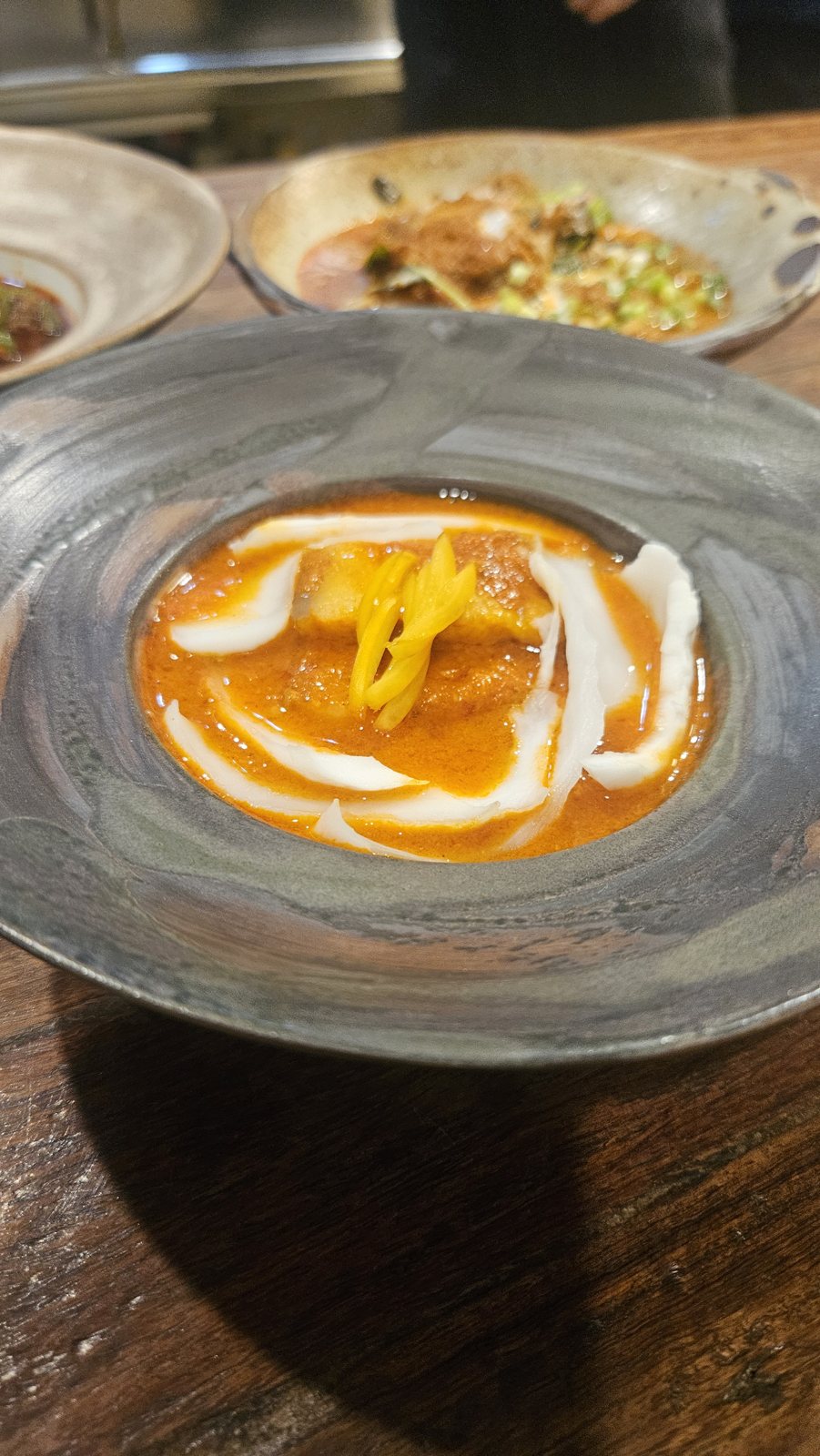
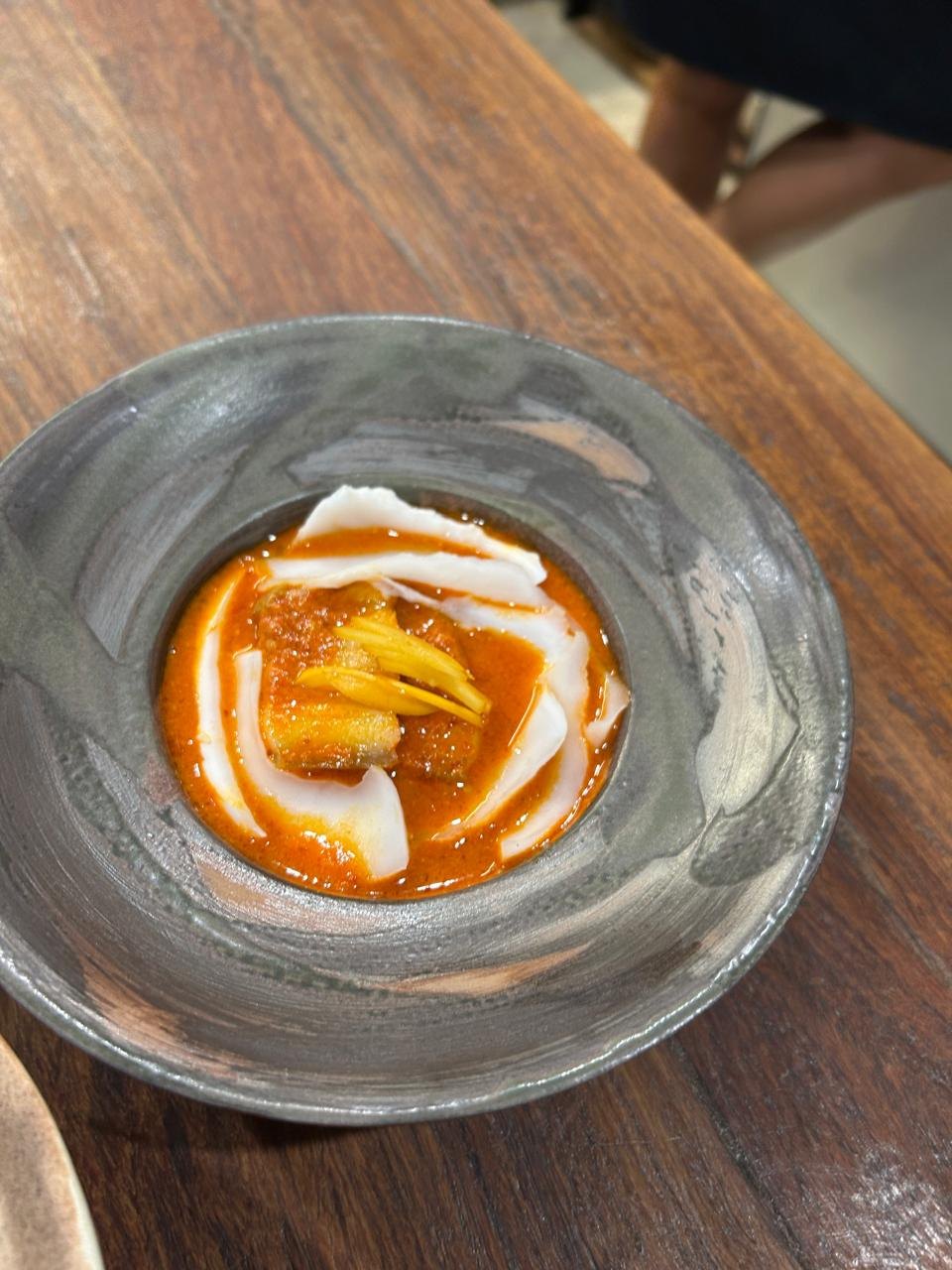
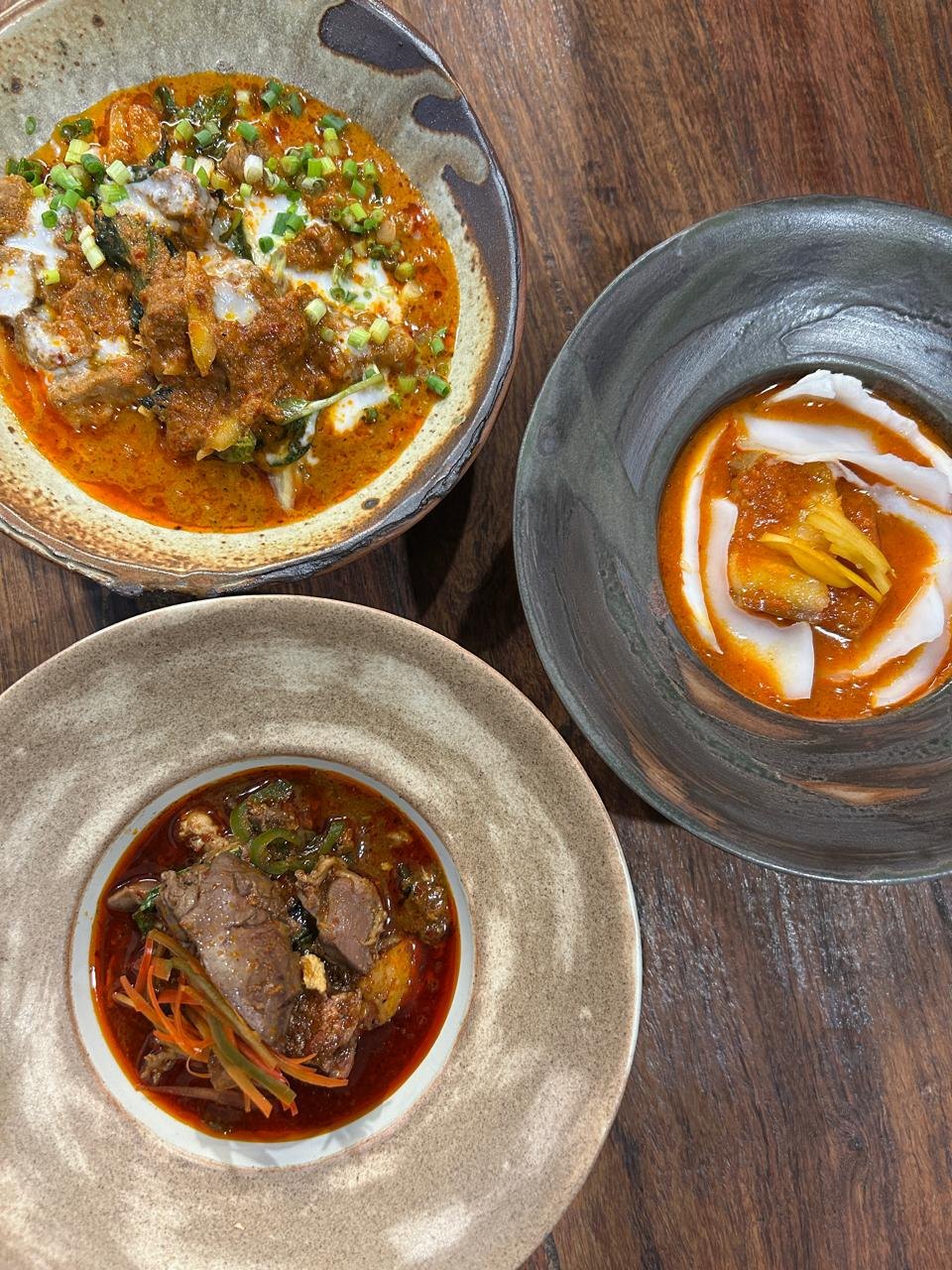
Khao soi, jungle curry, coconut curries with their cream cracked and fried: the bowls of the north, cooked the way the manuscripts describe them.
The grammar of flavor
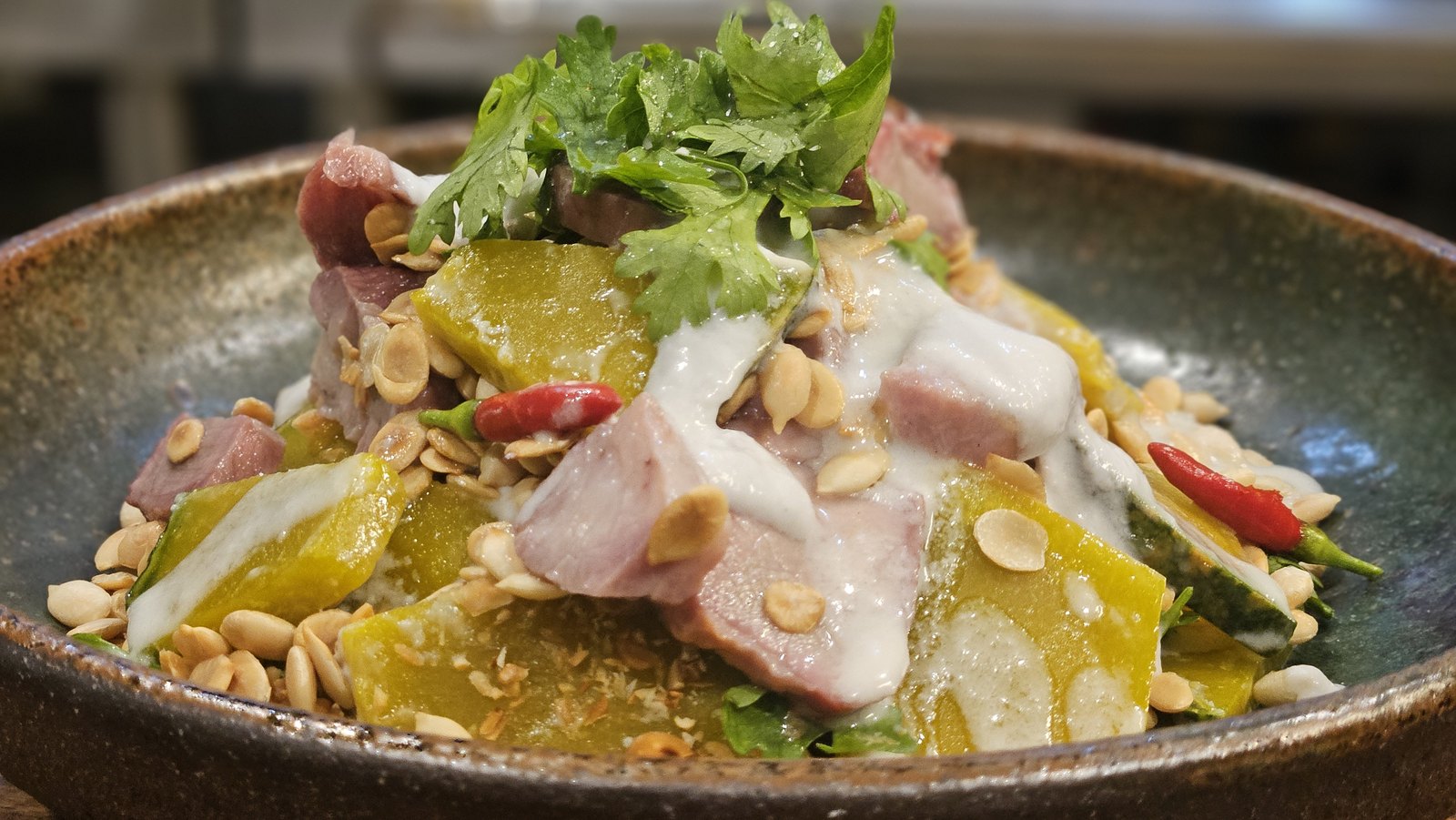
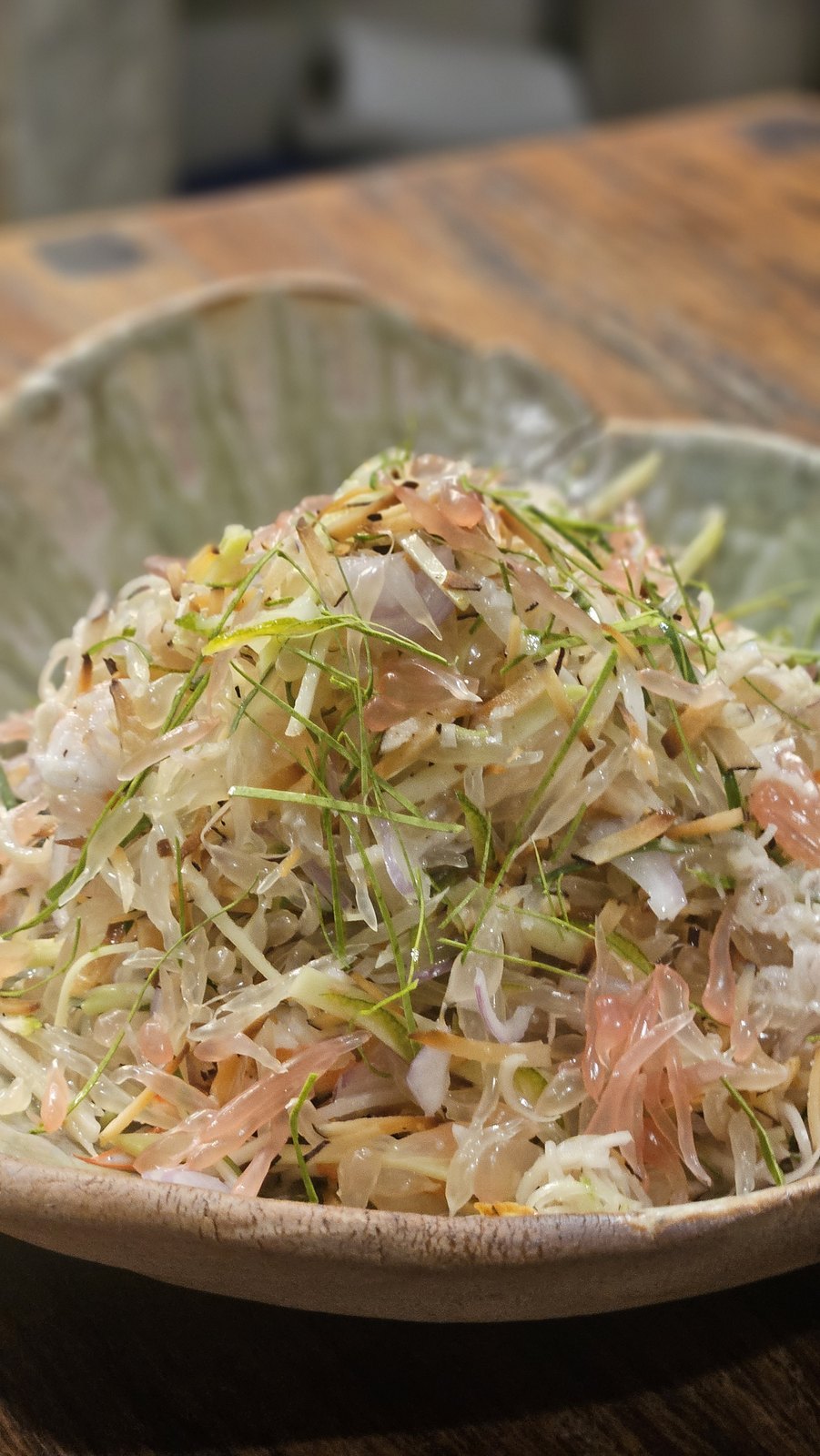
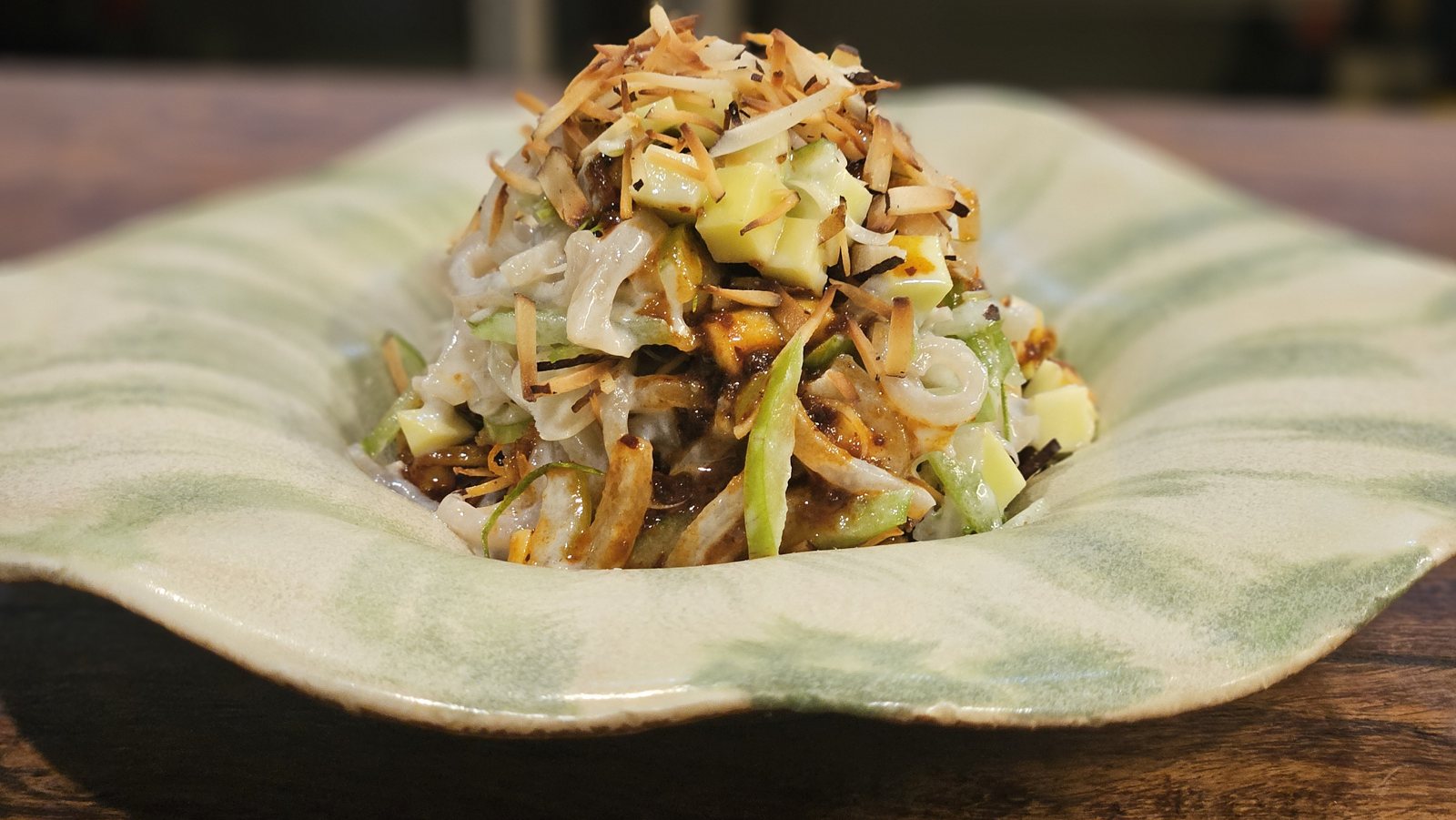
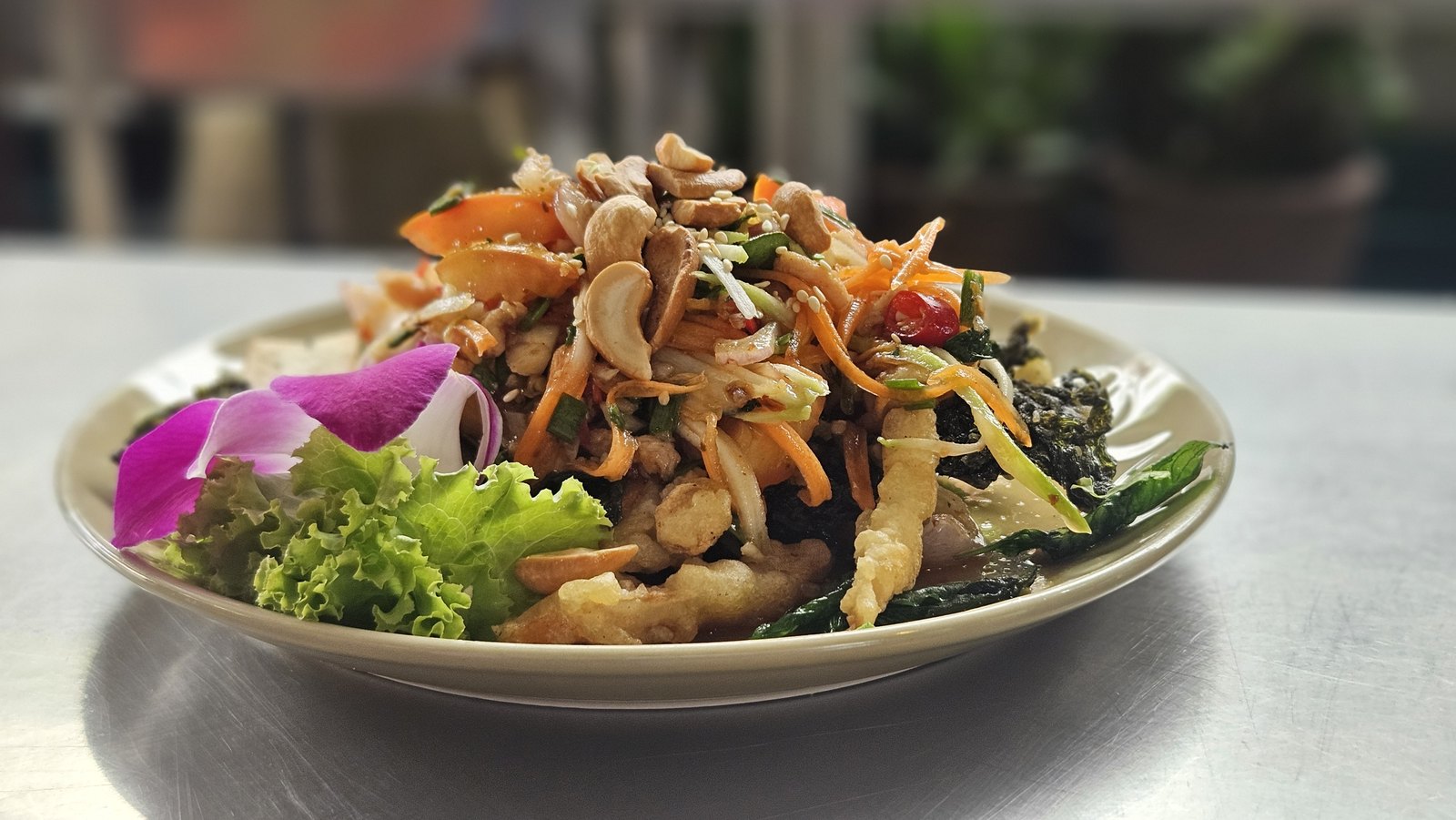
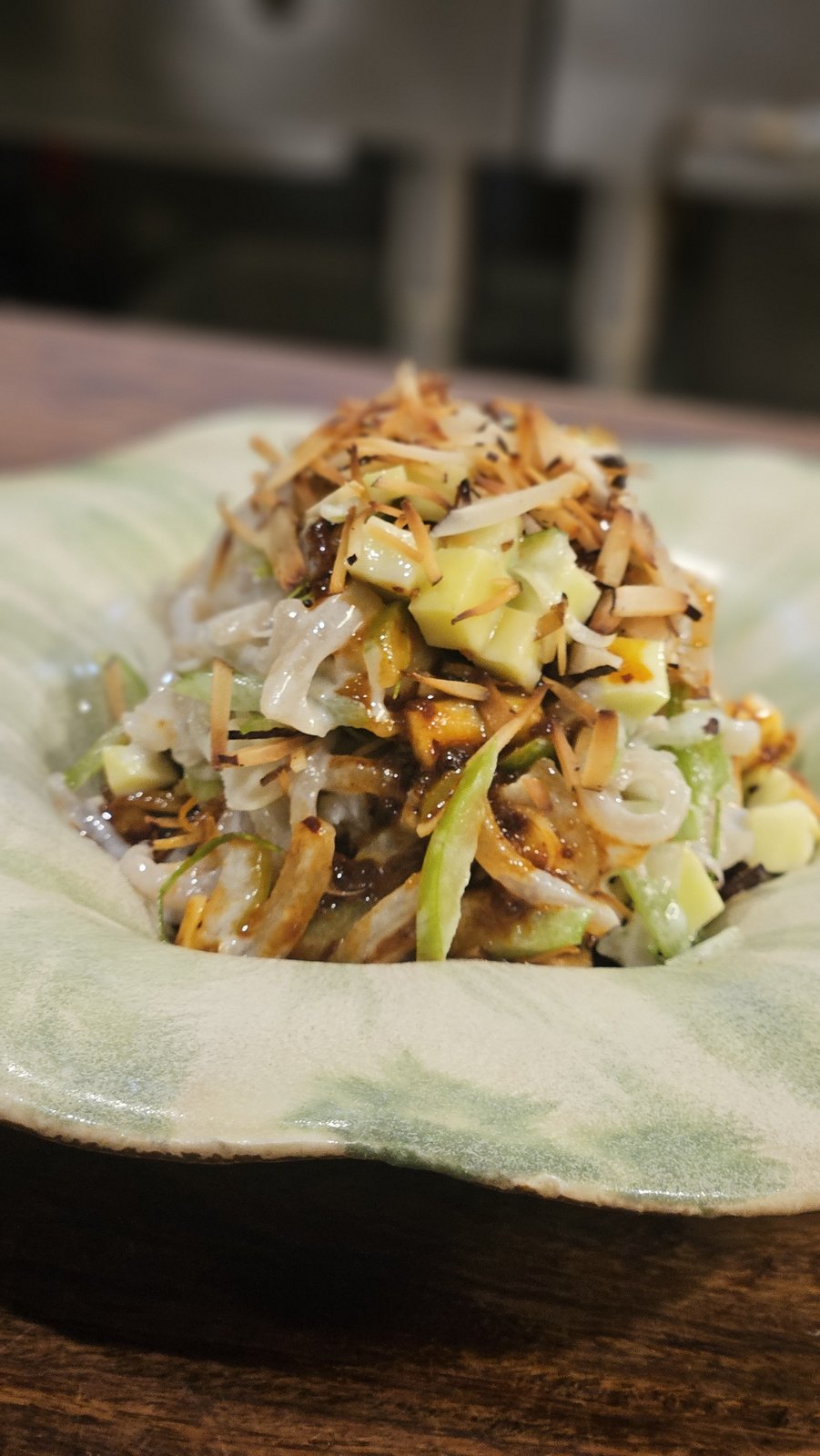
Hanuman teaches Thai food as a language with its own grammar, not a set of recipes. Salads are where it shows: green mango, banana blossom, tempura salad, each balanced by hand to the ingredients of the day.
In the kitchen
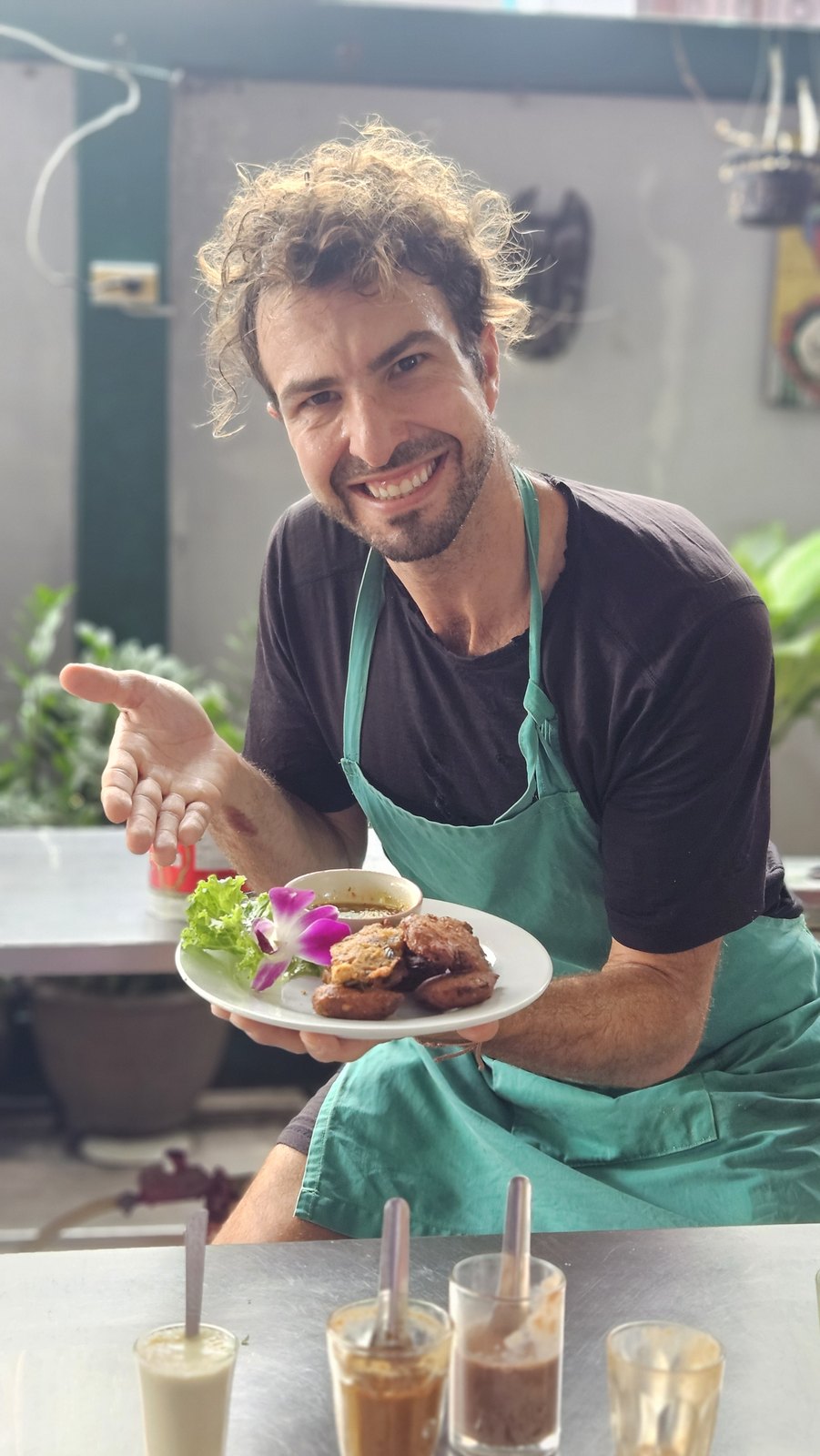
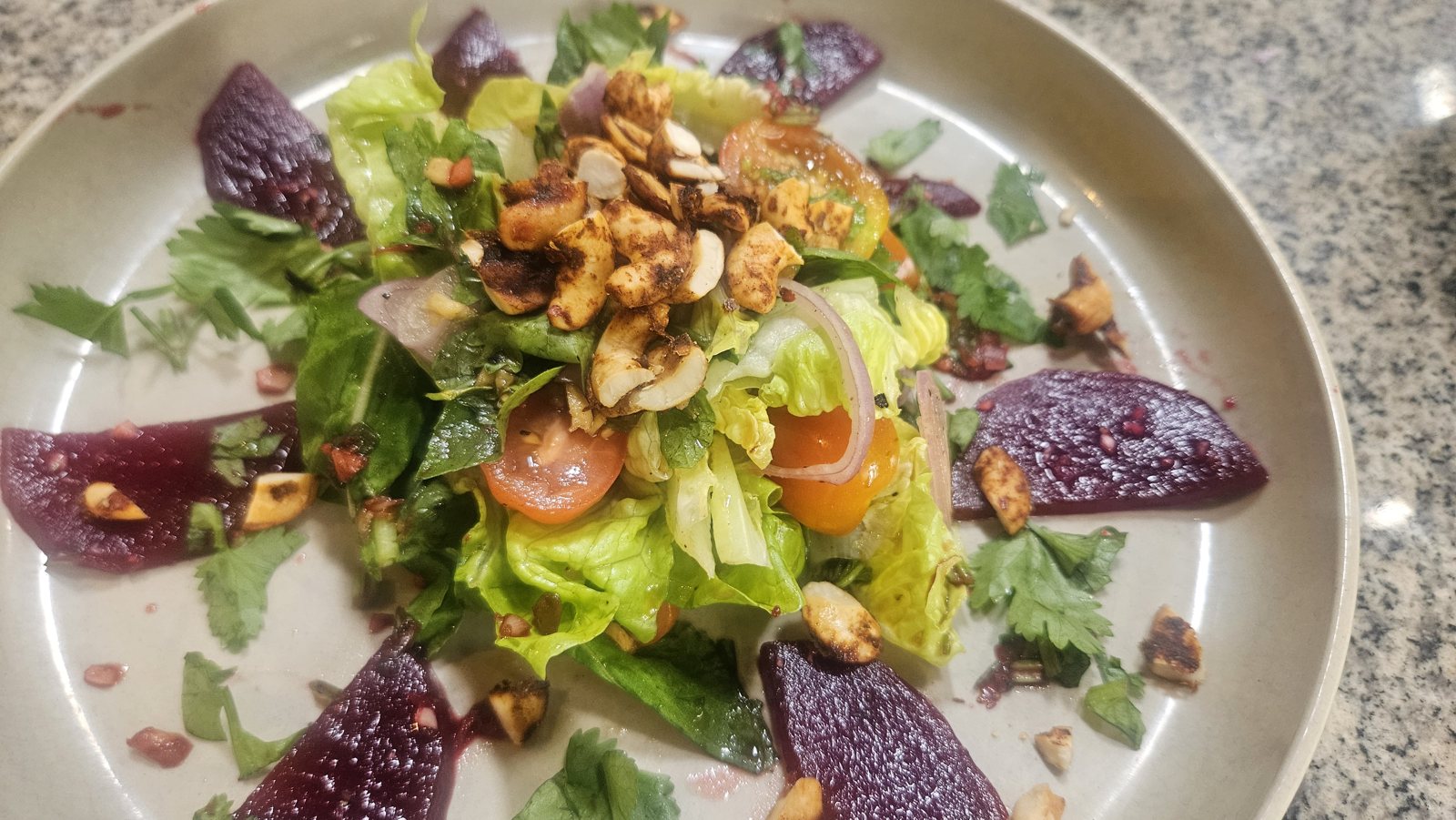
The Thai dishes on the Roots Alchemy menu were learned here: the pastes, the salads, the beet steak salad with Thai basil dressing that Chef Elliot made from the garden.
What Chef Elliot cooked at Hanuman Aspler's farm kitchen near Chiang Mai. Names are the dishes as taught; the plant-based versions are what Roots Alchemy serves.
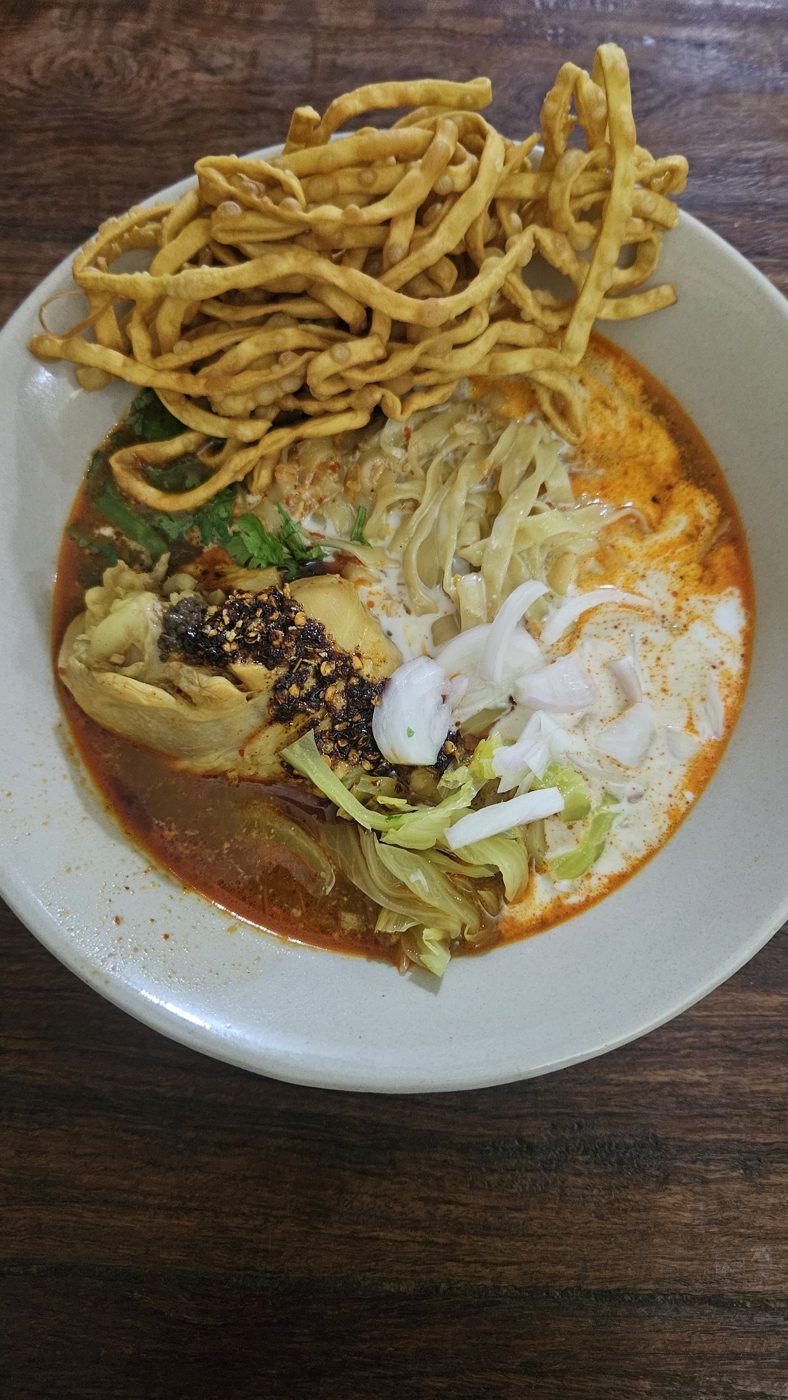
Chiang Mai's coconut curry noodle soup, topped with crispy fried noodles, pickled mustard greens and shallot.
Steamed curry custard: red curry paste, coconut cream and lime leaf, set in small cups.
Green mango salad: shredded sour mango, chili, lime and herbs pounded in the mortar.
Banana blossom salad with toasted coconut.
Pumpkin salad with crispy shallots and peanuts; the plant-based version is what Roots Alchemy serves.
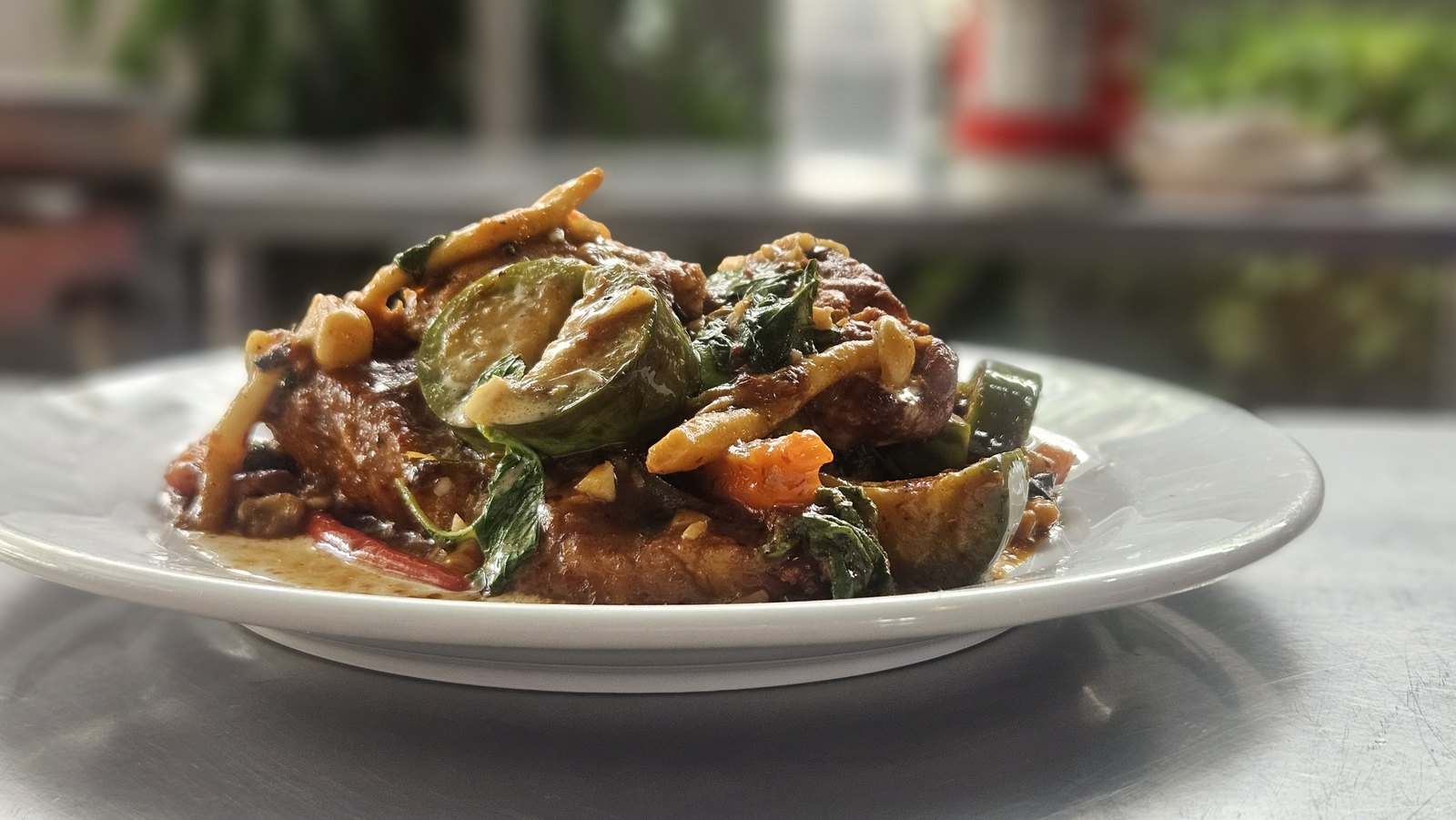
A northern Thai curry from the class, finished with coconut cream.
Three curries from one morning at the mortar.
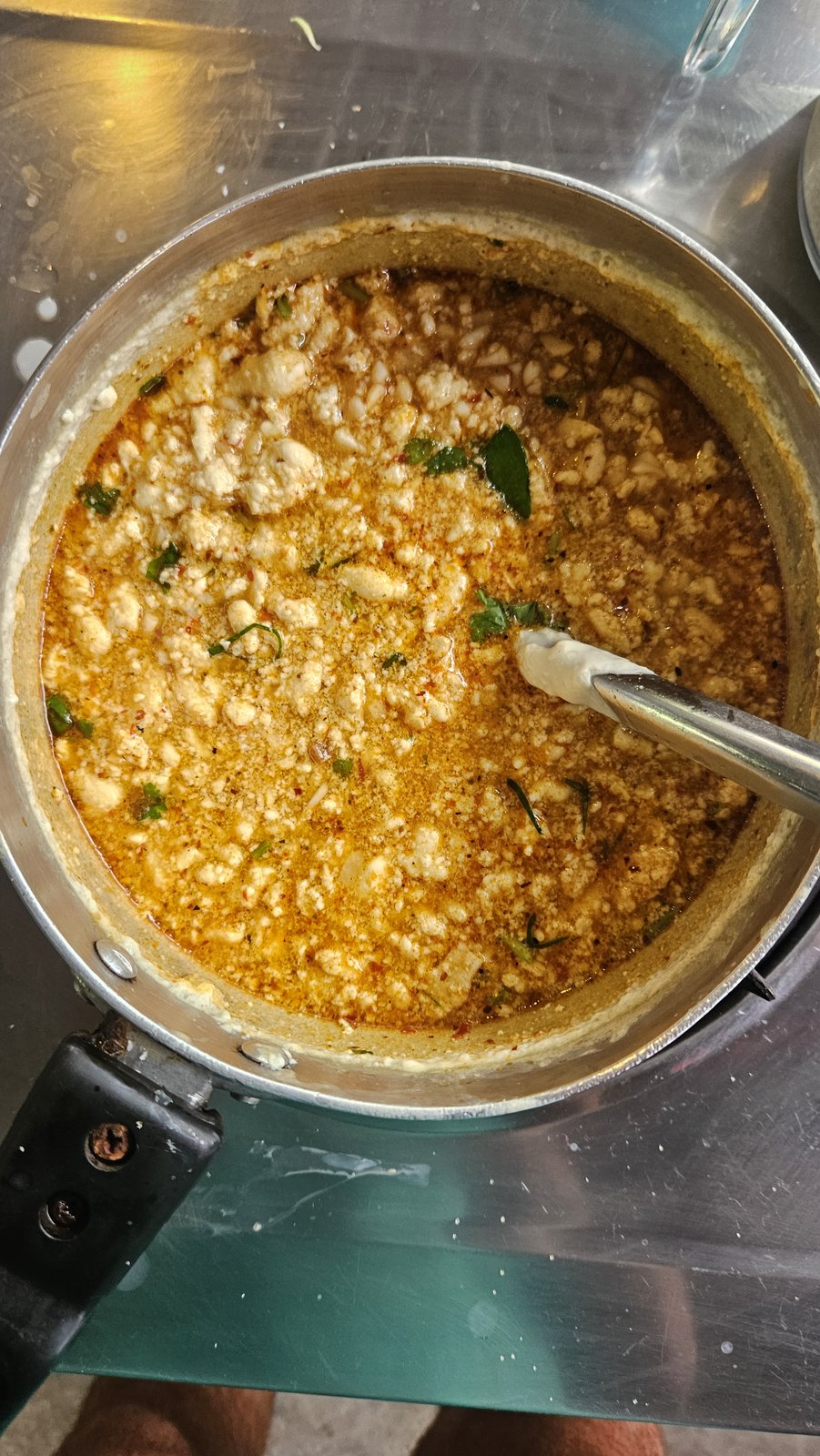
Tofu made from scratch that morning, served in red curry.
Crisp tempura vegetables tossed with herbs and chili.
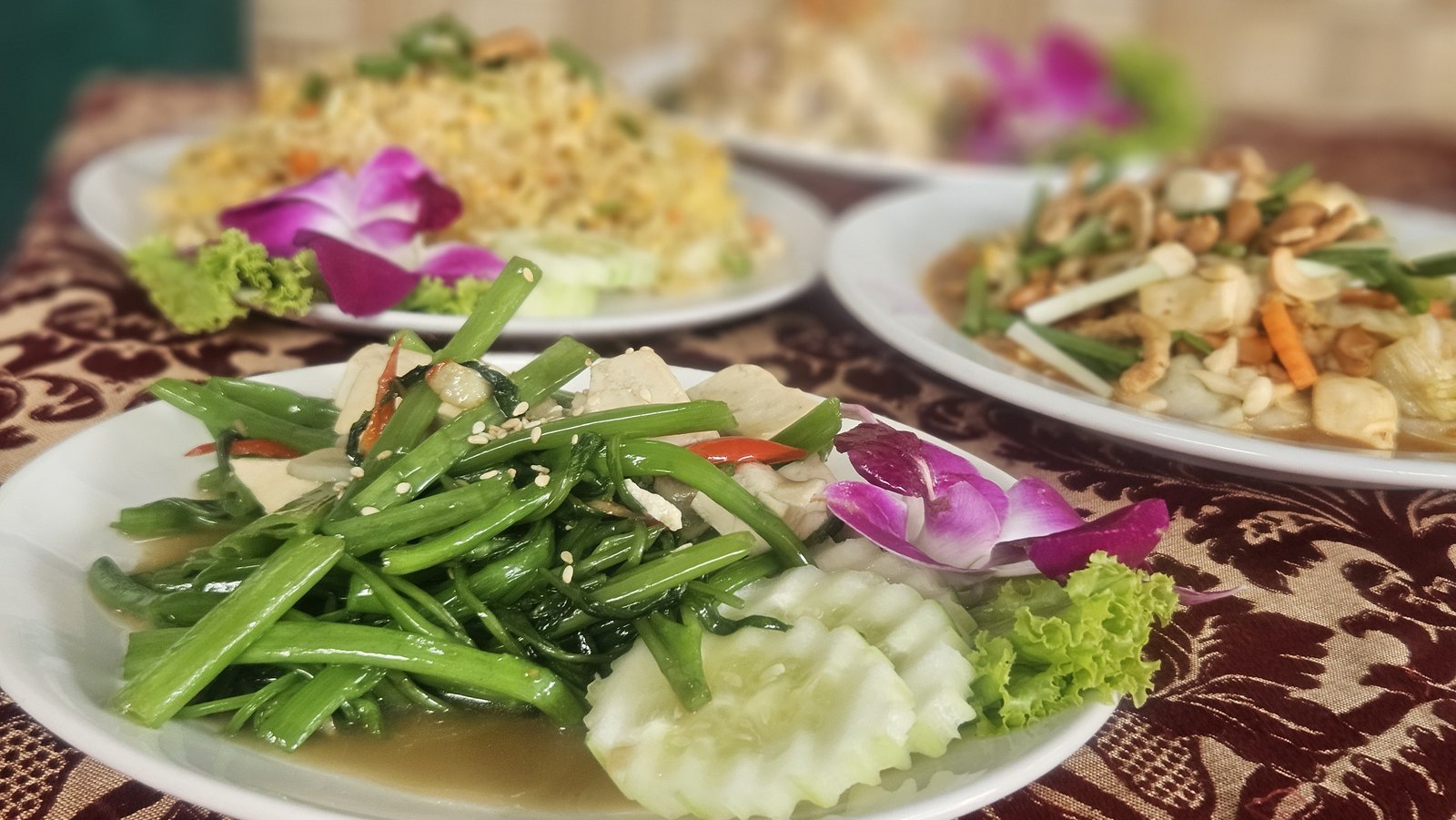
Morning glory flash-fried with garlic and chili.
Hanuman Aspler has lived in Thailand since 1989 and is a leading scholar of pre-war Siamese cuisine, decoding centuries-old culinary manuscripts for their flavor principles.
He teaches Thai food as a language with its own grammar: not fixed recipes but a framework for cooking freehand, built on context, ingredient and technique.
His farm and culinary sanctuary in Doi Saket, forty minutes from Chiang Mai, where ingredients are foraged from the garden the way families did in old Siam.
More of where I trained